Target Audience: PPE Wholesalers, Brand Owners, Construction & Mining Supply Procurement Officers (Australia/New Zealand).
Reading Time: 12 Minutes.
Introduction: Why Compliance is Your Biggest Profit Driver
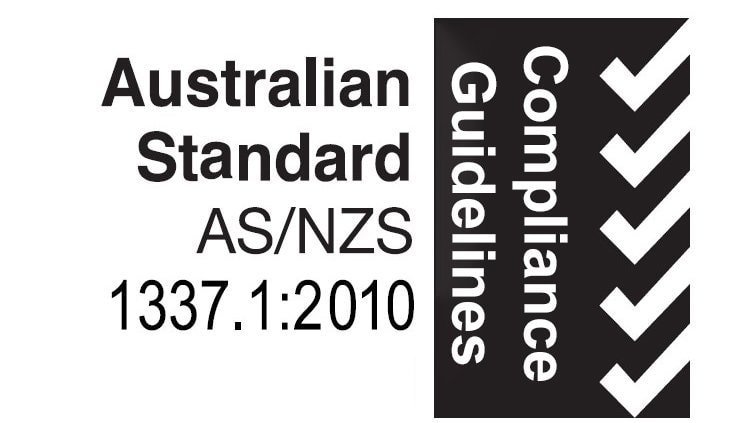
If you are a wholesaler, brand owner, or distributor targeting the Australian and New Zealand markets, understanding the AS/NZS 1337.1 Australian Standard is not just a technical necessity—it is the foundation of your profitability.
In the rigorous industrial sectors of Australia—mining, construction, and manufacturing—safety eyewear is not a fashion accessory; it is a critical piece of Personal Protective Equipment (PPE). Sourcing compliant eyewear ensures you avoid customs seizures, liability issues, and product recalls.
At LBAshades, we are a source factory with extensive experience in manufacturing compliant eyewear. This guide breaks down the technical requirements of Standards Australia AS/NZS 1337.1:2010 (+A1/A2 amendments) to help you choose the right products for your inventory.
1. Scope & Application: What Does AS/NZS 1337.1 Actually Cover?
Before designing your product line, you must define the scope. According to Section 1.1 of the standard document, AS/NZS 1337.1 specifies requirements for non-prescription eye and face protectors for occupational applications.
What is included:
Protection against flying particles and fragments.
Dusts, splashing materials, and molten metals.
Harmful gases, vapors, and aerosols.
What is NOT included (Crucial for niche buyers):
Laser Protection: This falls under AS/NZS 1337 Part 4 and 5.
Welding Radiation Filters: While the protector (frame/helmet) falls under 1337.1, the filter lenses for optical radiation must comply with AS/NZS 1338.
2. The Mechanics of Impact Resistance: More Than Just “Strong Plastic”
The heart of AS/NZS 1337.1 is impact testing. Unlike fashion eyewear, safety glasses are categorized by the velocity of the projectile they can stop. Choosing the right rating determines your market positioning.
2.1 Low Impact Resistance (Marking: S)
This is the entry-level standard.
Test Protocol (Drop-Ball): A 22mm steel ball (approx. 42 g) is dropped from a height of 1.8 meters onto the ocular and frame.
Failure Criteria: The lens must not crack, shatter into two pieces, or dislodge from the frame. Additionally, no contact is allowed between the protector and the eye area of the headform.
Commercial Use: General assembly work, laboratory visitors.
2.2 Medium Impact Resistance (Marking: I or F) – The Best Seller
This is the standard required for most industrial sites (mining, carpentry, construction). This is where the volume orders are.
Test Protocol (Ballistic): A 6.35mm steel ball is fired at the protector at a velocity of 40m/s to 45m/s.
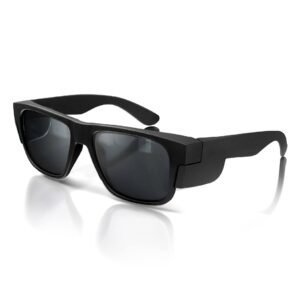
The Design Trap (Lateral Protection): Many buyers fail here. Clause 3.2.6 states that any protector claiming Medium Impact or higher must provide lateral protection. This means standard flat-front fashion designs will fail unless they have integrated side shields or a high-curve wrap-around design (Base 8 or Base 9).
Factory Insight: We use high-viscosity Polycarbonate (PC) for Medium Impact lenses. Standard acrylic or CR39 used in fashion eyewear will shatter instantly at these speeds.
2.3 High & Extra High Impact (Marking: V, B, or A)
High Impact (V/B): Withstands a 6.35 mm ball at 110–120 m/s. This rating is generally reserved for face shields, not spectacles.
Extra High Impact (A): Withstands projectiles at 175–190 m/s.
3. Optical Quality: The “Hidden” Quality Indicator
Impact resistance keeps the worker safe; optical quality keeps the worker productive. Australian buyers are extremely sensitive to complaints about “dizziness” or “distortion” from cheap safety glasses. AS/NZS 1337.1 has stricter optical tolerances than many fashion standards.
3.1 Transmittance & Tint Categories
The standard divides lenses into Categories 0–3 based on Luminous Transmittance (Tv).
Category 0 (Indoor/Clear): Tv > 80%.
Category 3 (Sunglare): Tv between 8% and 18%.
- UV Protection: Even clear lenses (Category 0) can block UV. If you claim UV protection, the solar UV transmittance must be strictly controlled accordingly.
3.2 Refractive Powers (Spherical & Prismatic)
Nothing kills a B2B relationship faster than a batch of lenses that induce nausea.
Spherical Power Tolerance: The mean value of optical power must be within ±0.09 Diopters.
Prismatic Tolerance: For assembled eyewear, the vertical prismatic difference between left and right eyes must not exceed 0.25 cm/m.
Why this matters for manufacturing: Achieving this requires precision-molded PC lenses. Cheap injection molds often have uneven cooling rates, leading to “wavy” lenses that fail the Prismatic Power test. At LBAshades, we use temperature-controlled cooling cycles to ensure the lens curve remains optically true.
3.3 Haze and Scattered Light
This regulation, often ignored by low-end factories, stipulates that scattered light (haze) must not exceed 3%.
The Risk: High haze makes lenses look “cloudy” under sunlight, creating safety hazards.
Our Solution: We use optical-grade raw materials and clean-room injection molding to prevent microscopic dust or mold roughness from creating haze.
4. Mandatory Markings: Where Customs Seizes Cargo
You can have the strongest, clearest glasses in the world, but if the markings are wrong, your product is illegal in Australia.
Permanent Marking on the Product
The markings must be etched or impressed (not just a sticker).
| Protection Type | Ocular Marking | Frame Marking |
| Low Impact | No specific mark (or S) | Manufacturer Mark |
| Medium Impact | I or F | I or F |
| High Impact | V or B | V or B |
| Extra High Impact | A | A |
| Splashproof | C or 3 | C or 3 |
| Dustproof | D or 4 | D or 4 |
Ocular Marking: If the lens and frame are separable, both must be marked.
ODM Service Highlight: We incorporate these mandatory text blocks into your custom packaging design files (AI/PDF) before production begins, ensuring you are retail-ready upon arrival.

5. Advanced Material Science: Durability Beyond Impact
AS/NZS 1337.1 tests for more than just brute force. It tests the longevity and stability of the materials in harsh Australian environments.
5.1 Resistance to Ignition
Safety glasses are often required near grinding machines and welding equipment. The corresponding test involves pressing a steel rod heated to 650°C against the frame and lenses.
Requirement: The material must not ignite or continue to glow after the rod is removed.
Material Choice: We strictly control the additives in our Polycarbonate and Nylon/TR90 frames to ensure flame retardancy without compromising flexibility.
5.2 Corrosion Resistance
For metal frames, it is required that they be immersed in a boiling salt solution.
Requirement: Surfaces must be smooth and free from corrosion.
Factory Process: We use high-quality electroplating and passivation layers for all metal components (hinges, screws, frames) to pass this “salt spray” simulation.
5.3 Thermal Stability
Australia has a hot climate. Safety equipment placed on the dashboard of mining trucks must not deform. This requires testing at a temperature of 60°C.
- Requirement: No physical distortion, and optical/impact properties must be maintained after heating.
6. Sourcing Strategy: OEM vs. ODM
When choosing an eyewear supplier for the Australian market, you generally have two paths:
Path A: OEM (Private Labeling Existing Models)
Best for: Wholesalers needing quick turnaround and lower MOQs.
Our Advantage: We have a catalog of pre-certified molds that already meet the Medium Impact (I/F) requirements, including the mandatory lateral protection side shields.
Speed: You select the model, we apply your logo and the AS/NZS markings, and ship.
Path B: ODM (Custom Design)
Best for: Brands looking to disrupt the market with unique aesthetics or specialized features (e.g., foam gaskets for dust protection, detachable arms).
Design Constraints: Our designers know the AS/NZS 1337.1 constraints. We ensure that your custom design maintains the 10 mm radius impact region coverage centered on the lateral canthus.
Prototyping: We create 3D printed samples to test the fit on the “Standard Anatomical Headform” (Figure 1 in the standard) before cutting expensive steel molds.
7. The Business Case: Margins, Durability, and Audience
Why buy AS/NZS 1337.1 Certified Eyewear?
Legal Liability Shield: In Australia, if a worker is injured wearing non-compliant eyewear, the liability can bankrupt a supplier. Certified products protect your business.
Higher Margins: Certified PPE is not a commodity; it is a technical product. Wholesale prices for Medium Impact glasses are significantly higher than standard sunglasses, while production costs (at our factory scale) remain competitive.
Target Audience Profile:
Mining & Resources: High volume, frequent replacement cycles. Requires high dust resistance.
Construction: Requires high durability and anti-fog coatings.
DIY/Hardware Retail: Requires attractive packaging and clear “Medium Impact” branding.
Conclusion & Next Steps
Sourcing for the Australian market requires a partner who acts as both a manufacturer and a compliance consultant. AS/NZS 1337.1 is rigorous, detailed, and strictly enforced.
At Eyewear Suppliers, we don’t just guess; we test. From the drop-ball test to the haze measurement, every batch is verified against the specific clauses of the standard before it leaves our factory floor.
Are you ready to build a compliant, high-margin eyewear line?
[Contact Us Now] for our catalog of AS/NZS 1337.1 certified Medium Impact frames, or send us your design for a feasibility report.
FAQ Schema
Q1: What is the AS/NZS 1337.1 standard specifically for?
A: AS/NZS 1337.1 is the joint Australian and New Zealand standard that specifies the minimum requirements for Personal Eye Protection against common occupational hazards such as flying particles, dust, splashes, and molten metals. Unlike general fashion eyewear, any glasses marketed as “Safety Eyewear” in these regions must meet these rigorous mechanical and optical tests to ensure wearer safety in industrial environments.
Q2: How are impact protection levels categorized under AS/NZS 1337.1?
A: According to the standard, impact resistance is classified into four main categories based on the velocity and mass of the potential impact:
Low Impact: Can withstand a 6mm steel ball at 1 2m/s.
Medium Impact: Can withstand a 6 mm steel ball at 45 m/s (Standard for most safety glasses).
High Impact: Can withstand a 6 mm steel ball at 120 m/s (Typically reserved for goggles and face shields).
Extra High Impact: Resistance exceeding 120 m/s.
Expert Note: As an OEM manufacturer, we ensure that our Polycarbonate (PC) lenses are specifically treated to exceed Medium Impact requirements while maintaining optical clarity.
Q3: What is the difference between AS/NZS 1337.1 and ANSI Z87.1 (USA)?
A: While both standards focus on eye safety, they are not interchangeable. The testing protocols for AS/NZS 1337.1 often involve different velocity requirements and specific “lateral protection” (side shield) dimensions that differ from the American ANSI Z87.1 or European EN166 standards. If you are importing for the Australian market, you must ensure your supplier has specific testing reports for AS/NZS 1337.1.
Q4: Can I order Private Label safety glasses that comply with this standard?
A: Absolutely. As a B2B supplier specializing in OEM/ODM, we can manufacture safety frames that incorporate your brand logo while strictly adhering to AS/NZS 1337.1 technical specifications. We provide full traceability for materials like TR90 and high-grade Polycarbonate to ensure your batch passes independent laboratory testing.