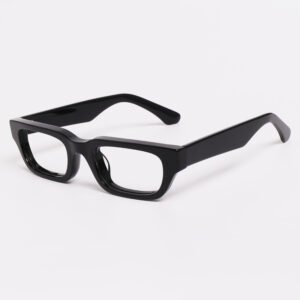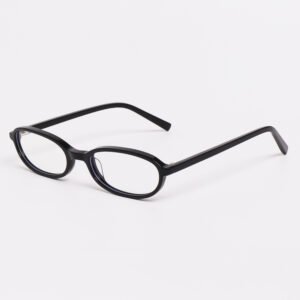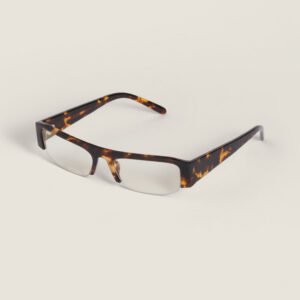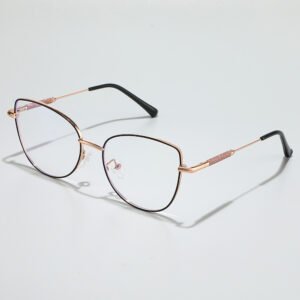
Are you constantly dealing with customer complaints because a temple snapped after just one month of wear? Or perhaps you are struggling to justify a premium price point for your new eyewear collection?
For eyewear brand owners, retailers, and distributors, understanding the intricate parts of a glasses is not just about product knowledge—it is about protecting your profit margins. When you know exactly how high-quality barrel hinges prevent warranty claims, or how true Mazzucchelli acetate wire cores hold their shape during global shipping, you transition from competing on price to competing on undeniable value.
As an eyewear manufacturing expert with over 15 years in B2B OEM/ODM production, I will break down the complete anatomy of eyeglasses. This guide will help you understand every component, allowing you to source smarter, reduce after-sales headaches, and ultimately increase your brand’s market share.
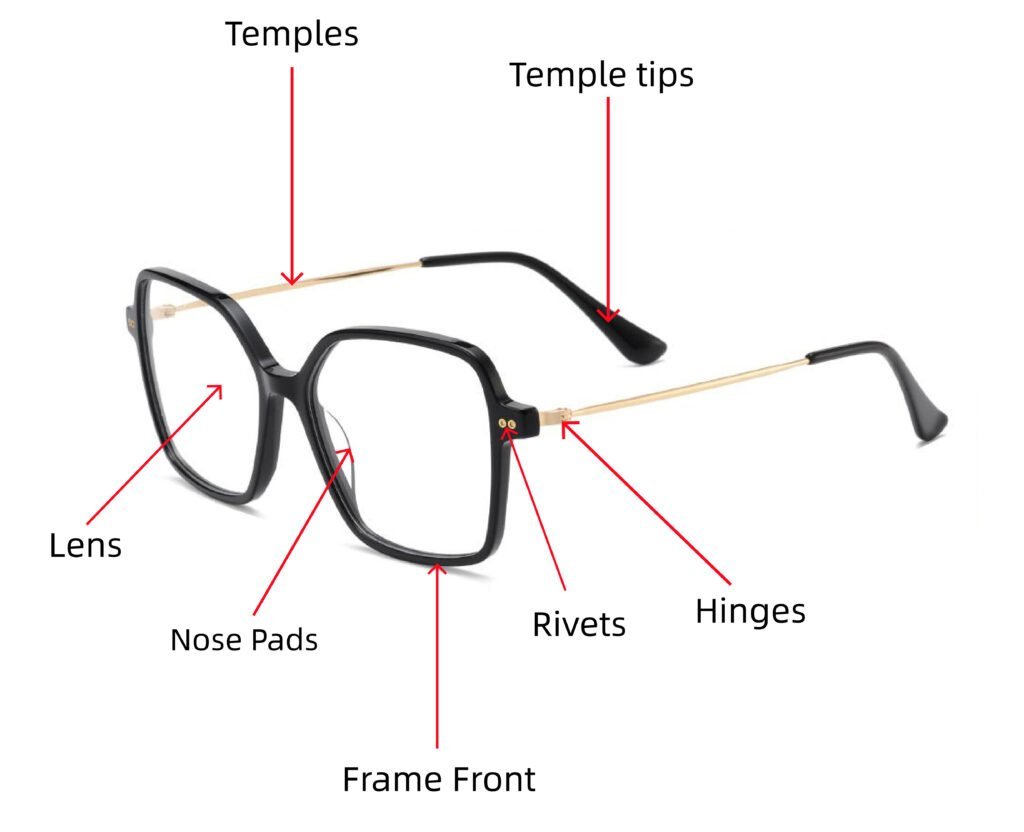
What are the names of the parts of glasses?
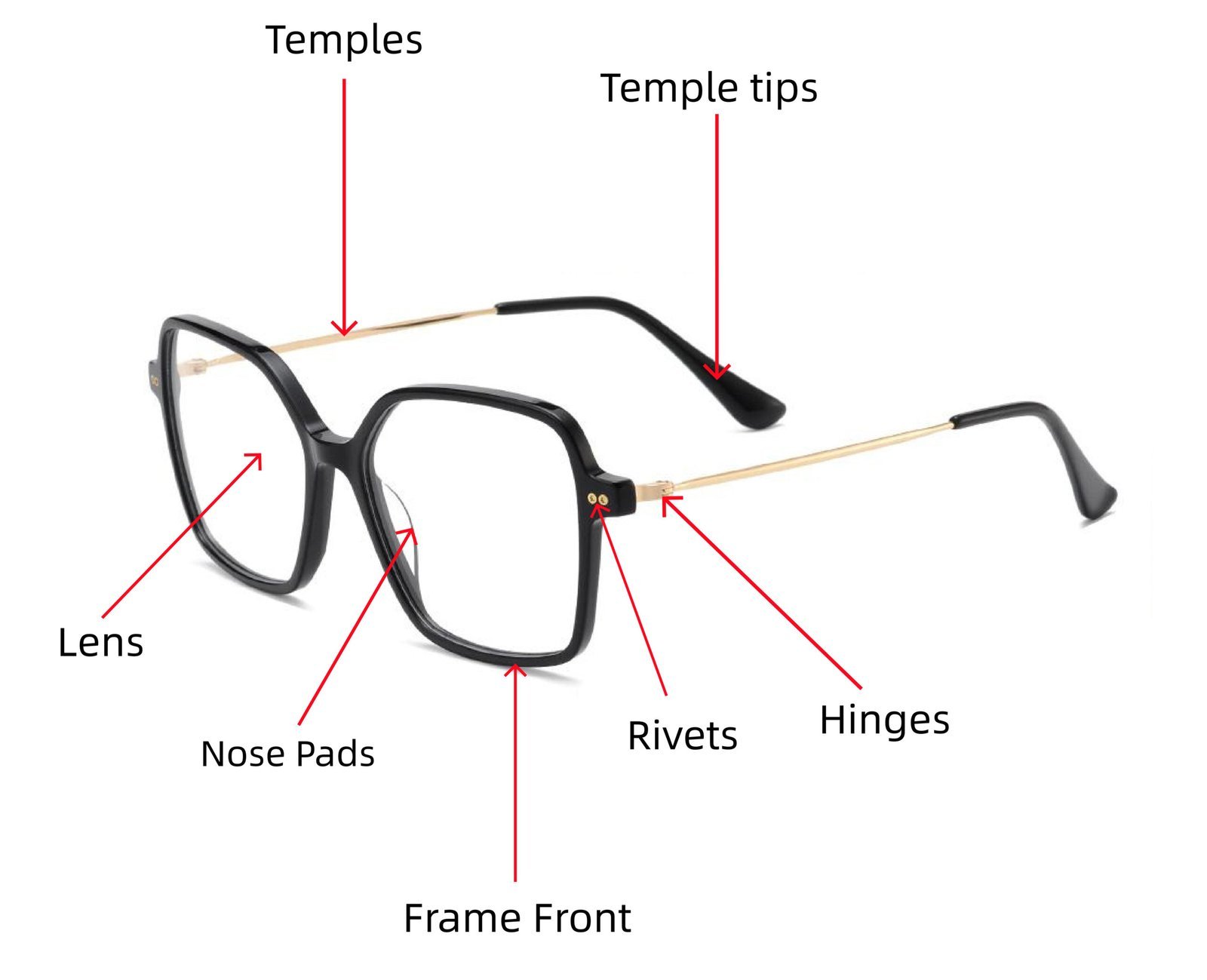
1. Frame Front

The frame front of the glasses is the most visible part. It fixes the lenses in place and determines the overall aesthetics. If the front warps or breaks, the glasses are useless.
Structural Variations:
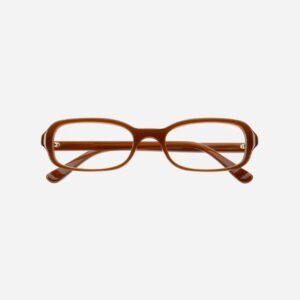
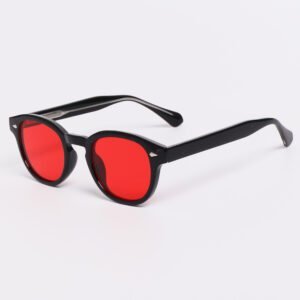
Full-rim: The front frame of the glasses completely wraps around the lenses. This offers the highest protection for thicker lenses.
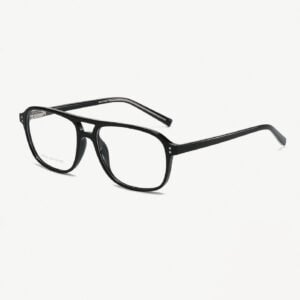
Half-rim: The upper part of the front frame is the same as the full-rim, while the lower part exposes the edge of the lenses.
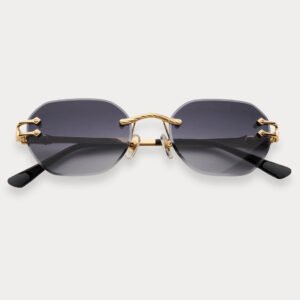
Rimless: The lenses are connected by a metal bridge, leaving the edges of the lenses completely exposed.
From these three basic types, multiple styles can be derived, such as classic aviator styles, bold cat-eye styles, simple round frames, and retro rectangular frames. The general materials used for the front of the frame are: Acetate, PC, TR90, Metal, and Titanium.
2. Temples

Commonly known as “temple arms”, the temples extend from the front of the frame to above the ears, firmly fixing the glasses to the wearer’s face. While there are many styles of temples, their main function is to ensure the stability of the glasses when worn. General temple materials include: Acetate, PC, CP, TR90, Metal, and Titanium.
Wondering how long the temples you need are? This information is usually printed or etched on the inside of the temples. Temple length, along with bridge width and lens diameter, constitutes the three main dimensions of an eyeglass frame.
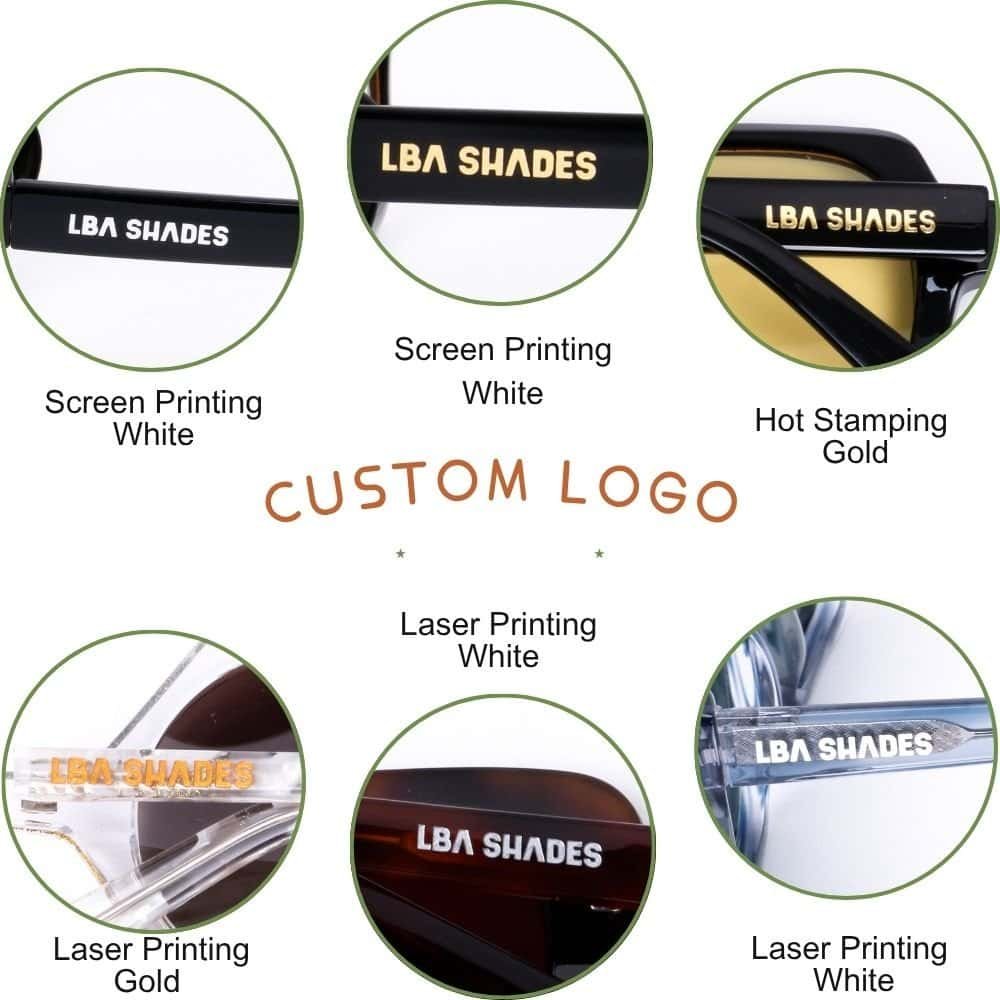
Commercial Application: The temple is your prime real estate for branding.
Custom options include:
Customizable temple shapes and lengths to fit specific regional demographics.
Unique pattern inlays or textured finishes to create a luxurious tactile feel.
Inner/outer logo printing or metal logo plates to boost brand recognition.
Temple ends featuring colorful designs that match the brand’s color tone.
3. Hinges

The hinge is the joint connecting the front of the frame to the temples. It is the most critical mechanical component in the entire structure of the glasses.
Understanding Hinge Types:
- Barrel Hinges: This is a very common type of hinge. They come in various barrel quantities, such as 3, 5, 7, and 9. These barrels interlock with each other to form a stable hinge structure.B2B Tip: Upgrading from a 3-barrel to a 5-barrel hinge costs pennies but vastly improves durability.
- Spring Hinges: These are also very common and are often used in full-rim and rimless eyeglass frames. Their characteristic is having “elasticity”. When you fully open the frame, it can stretch beyond its maximum extension range. This happens because a spring is built into the hinge. This is perfect for adapting to different head widths, reducing pressure.
- Plastic Hinges: Usually only found on plastic glasses. They are fixed with only one screw, and their stability is inferior to barrel hinges. Avoid these for high-end collections.
4. Rivets

Rivets and pins are small metal parts visible on the front of the frame and the side of the temples.
While rivets are often suitable for decorative purposes, in acetate sheet production lines, we use real, functional rivets. These functional rivets penetrate the acetate sheet to firmly fix the hinge to the frame. This traditional craftsmanship not only looks stylish but also physically enhances the structural strength of the frame.
5. Pin / Wire Core

You might notice a metal strip inside the temples. This component is called a metal wire core. Its primary function is to reinforce the acetate sheet and help maintain the shape of the temples. Lorem ipsum dolor sit amet, consectetur adipiscing elit. Ut elit tellus, luctus nec ullamcorper mattis, pulvinar dapibus leo.
If you do not have it, your temples will eventually deform and require repeated thermoplastic adjustments to maintain the correct shape. The metal wire core helps maintain the adjustment effects made by the optometrist. However, nowadays, it has also gradually evolved into a decoration; various shapes add points to your glasses, creating a more refined and fashionable visual effect.
6. Lenses

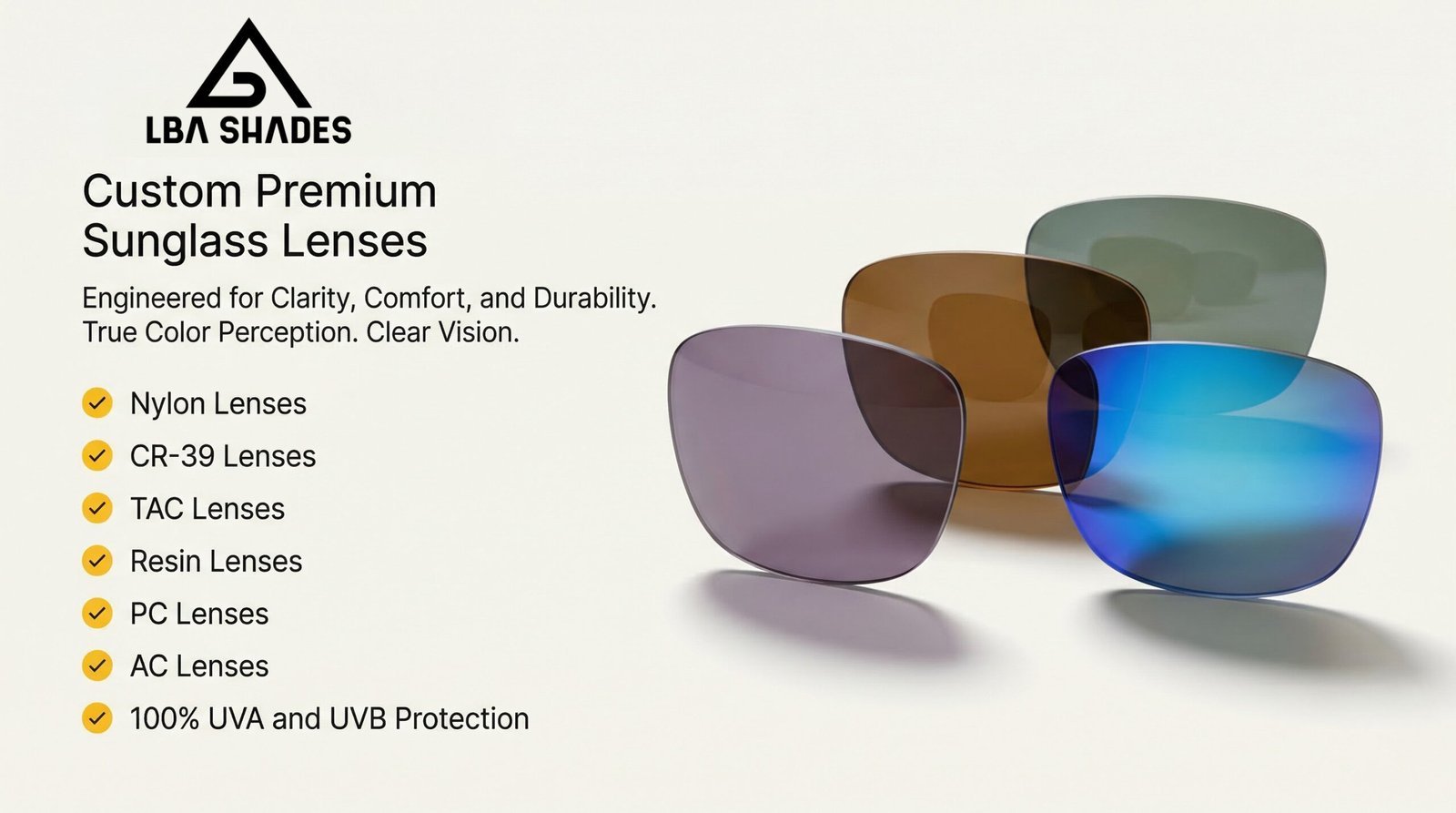
Although you are selling frames, the lens is where the consumer actually looks through to see things. Even for plano (non-prescription) sunglasses or anti-blue light glasses, lens quality is crucial.
Material Composition & Application:
PC (Polycarbonate): Possesses strong impact resistance. It is an ideal choice for sports glasses and entry-level fashion sunglasses.
TAC (Triacetate Cellulose): The gold standard for polarized lenses. It effectively reduces glare and is extremely lightweight.
Nylon: Often used for its specific performance attributes in modern eyewear.
CR39: Offers optical clarity almost identical to glass, but weighs only half as much as glass. This makes it the ideal choice for high-end fashion brands.
FL-41 Lenses: Specialized lenses often used for light sensitivity.
Custom Lens Options to Increase Margin: You can significantly mark up your retail price by adding custom options such as:
Gradient coatings or mirror coatings.
Tinted options (brown, grey, green, etc.).
Functions like anti-scratch, anti-fog, and anti-corrosion.
Lens lettering, used for brand identification or QR codes.
7. Nose Pads

Nose pads fit on the wearer’s nose bridge to distribute the weight of the glasses.
How they are integrated depends on the material: Plastic/acetate frames usually have built-in (molded) nose pads. Conversely, they are usually connected to metal frames via pad arms. Metal frames generally use adjustable metal nose pads, whereas sports glasses usually use silicone nose pads.
8. Temple Tips
The temples of metal frames are usually decorated with plastic or silicone sleeves, known as temple tips or ear socks.
The Importance of Temple Tips: Prolonged contact with bare metal can cause skin irritation or allergic reactions, such as nickel allergies. Using high-quality temple tips made of smooth acetate or TR90 material provides a comfortable and non-slip grip. Do not let a cheap, abrasive ear sock ruin the wearing experience of an otherwise premium metal frame.
Why Choose Us for Your Eyewear Manufacturing?
Understanding the parts of a glasses is step one. Step two is partnering with a factory that actually executes these details flawlessly. At Yiwu Luba Eyewear Co., Ltd., we don’t just assemble parts; we engineer premium eyewear designed to scale your B2B business.
Premium Materials as Standard: We source authentic Mazzucchelli acetate, ensuring your frames have the rich, lustrous finish that commands a premium retail price.
Engineering that Eliminates Returns: By utilizing functional rivets, 5-barrel or spring hinges, and sturdy wire cores, we build frames that survive daily wear and tear, drastically reducing your customer return rates.
Agile OEM/ODM Solutions: Whether you need a low MOQ to test a new market or high-volume private label manufacturing, we adapt to your purchasing cycle.
Your Next Step
Stop losing margin to poorly constructed frames and high return rates. By mastering the anatomy of eyewear—from the core frame front to the intricacies of CR39 lenses and functional rivets—you are better equipped to source products that elevate your brand.
Would you like me to send you our latest B2B wholesale catalog with tiered pricing options for custom acetate and TR90 frames?
Contact us:
Submit an inquiry immediately via eyewear-suppliers.com!
WhatsApp: