In the competitive world of optical retail, one question consistently arises from discerning customers and new boutique owners alike: What are acetate glasses, and why do they command a higher price point than plastic?
As a professional eyewear manufacturer, LBAshades goes beyond the basics. Today, we unveil the technical superiority of acetate, specifically focusing on why our partnership with Mazzucchelli 1849 creates a distinct competitive advantage for your inventory..
Today, we are going deep into the world of Cellulose Acetate, specifically explaining why our commitment to using Italian Mazzucchelli acetate sets our manufacturing—and your inventory—apart from the competition.
What is Cellulose Acetate?
Unlike standard petroleum-based plastics (such as TR90 or polycarbonate), Cellulose Acetate is a semi-synthetic polymer. It is derived from renewable resources, primarily wood pulp and cotton linters, combined with acetic anhydride.
For eyewear brands, this chemical composition offers two critical advantages:
Hypoallergenic Properties: It is safe for prolonged skin contact, reducing customer complaints regarding irritation.
Molecular Stability: Unlike brittle plastics that snap under pressure, acetate binds at a molecular level that allows for flexibility and shock absorption.
Inside the Factory: The Manufacturing Process
Why do acetate frames command a higher wholesale and retail price? The answer lies in the complexity of production. Unlike injection molding—which takes seconds—producing a high-quality acetate frame is a multi-step artisanal process that showcases true craftsmanship.
1. Curing and Cutting (CNC Precision)
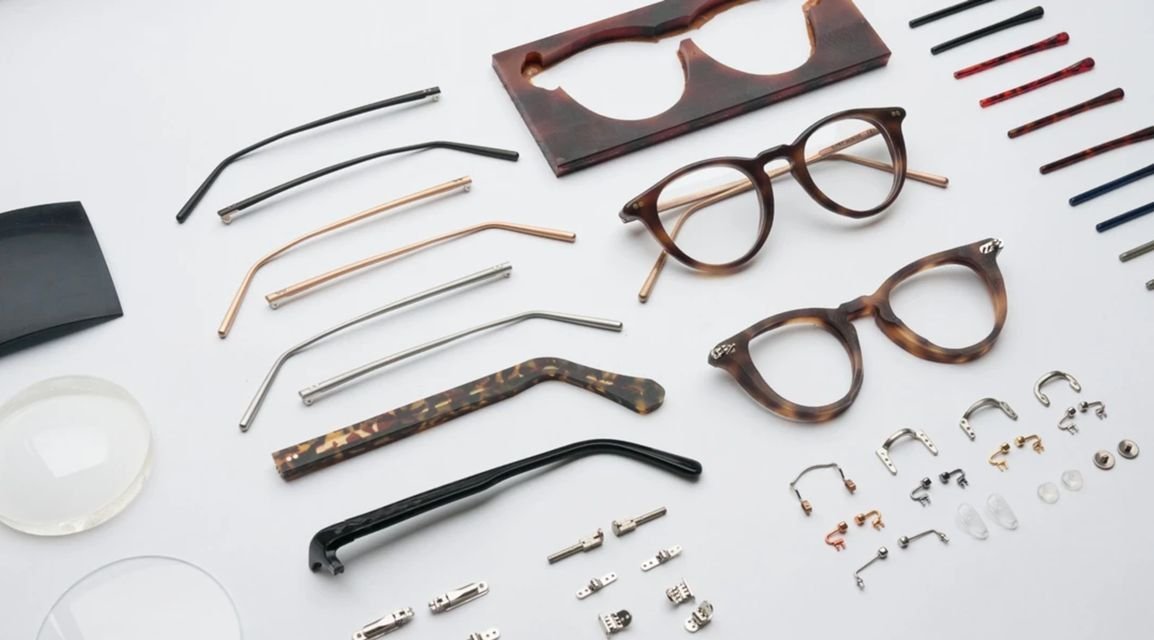
We start with large sheets of cured acetate (often sourced from Mazzucchelli). Using high-precision 5-axis CNC machines, we carve the frame front and temples from the solid block. This ensures that the structural integrity of the material is maintained.
2. Tumbling and Polishing
This is where “cheap” acetate differs from “premium” acetate. At LBAshades, our frames undergo a rigorous tumbling process involving wood chips and wax pastes for 7 days. This slow polishing removes all tool marks and brings out the material’s natural, deep luster—something a spray-on coating can never mimic.
3. Wire Core Insertion
To ensure adjustability and durability, we shoot a metal wire core (often visible in translucent models) into the temples. This allows opticians to heat and mold the frame for a perfect customer fit—a feature impossible with injection plastic.
The Mazzucchelli 1849 Difference
In the B2B eyewear sector, the name Mazzucchelli is synonymous with luxury. Based in Italy, Mazzucchelli 1849 is the world leader in acetate production.
Why LBAshades uses Mazzucchelli for your orders:
Visual Depth: Their lamination technology stacks different colored sheets to create 3D effects (tortoiseshells, gradients) that look organic, not painted.
Tactile Warmth: The material warms to body temperature, providing a premium “heavy” feel that customers associate with high value.
Longevity: Mazzucchelli acetate retains its shine for years and can be re-polished, extending the product lifecycle.
Acetate vs. Injection Plastic: A Retailer’s Comparison
As a wholesaler, you need to explain the value proposition to your buyers. Here is a quick breakdown of why acetate wins.
| Feature | Injection Plastic | Premium Acetate (High-End) |
| Raw Material | Petroleum pellets (Nylon/Polycarb) | Plant-based (Cotton/Wood Pulp) |
| Production | Mold Injected (Instant) | CNC Cut & Hand Polished (Days) |
| Adjustability | None (Memory plastic returns to shape) | High (Heat-moldable for custom fit) |
| Durability | Brittle over time; color may peel | Color embedded in material; self-healing |
| Target Market | Fast Fashion Brands/Promotional Activities | Boutiques / Opticians / Luxury Brands |
Why Acetate is the Best Investment for Your Brand
1. Higher Perceived Value & Margins
Acetate frames have a substantial weight and a rich, glossy finish. This “hand-feel” allows retailers to mark up products significantly higher than plastic alternatives, increasing your profit per unit.
2. Reduced Returns due to breakage
Acetate is durable. Furthermore, because the color runs through the entire block, surface scratches can be buffed out. This longevity translates to fewer warranty claims and happier customers.
3. Unlimited Customization (ODM/OEM)
Because we machine acetate from sheets, we can rapidly prototype new shapes for your brand without the expensive mold costs associated with injection plastic.
Want a thicker, bold frame? We adjust the CNC path.
Need a custom color way? We select a new laminate sheet.
Partner with LBAshades: Your Factory Direct Advantage
Understanding the material is step one. Choosing the right manufacturing partner is step two. LBAshades offers a seamless supply chain solution for global wholesalers.
Rapid Prototyping: From CAD drawing to physical sample in record time.
Low MOQs for Custom Orders: Start your private label collection without overstocking.
7-Day Customization: Add your logo to our ready-to-ship Mazzucchelli stock frames.
Elevate Your Inventory
Acetate is not just a material; it is a statement of quality. By stocking Mazzucchelli acetate frames manufactured by LBAshades, you are offering your customers a product that marries Italian heritage with precision engineering.
Ready to upgrade your eyewear line? Explore our Acetate Collection or Contact Us today to discuss your OEM requirements. Let’s build a brand that lasts.
Frequently Asked Questions (FAQ)
Q: Can acetate glasses be repaired?
A: Yes. Unlike plastic, acetate can be fused back together using acetone in some cases, and dull frames can be re-polished to look brand new.
Q: Is acetate biodegradable?
A: Cellulose acetate is derived from plants and is considered a bio-plastic. It is far more eco-friendly than petroleum-based synthetic plastics.
Q: Why are my acetate glasses turning white?
A: This is oxidation, often caused by sweat or cosmetics reacting with the material over time. The good news? A quick buffing wheel session can remove this layer and restore the shine.