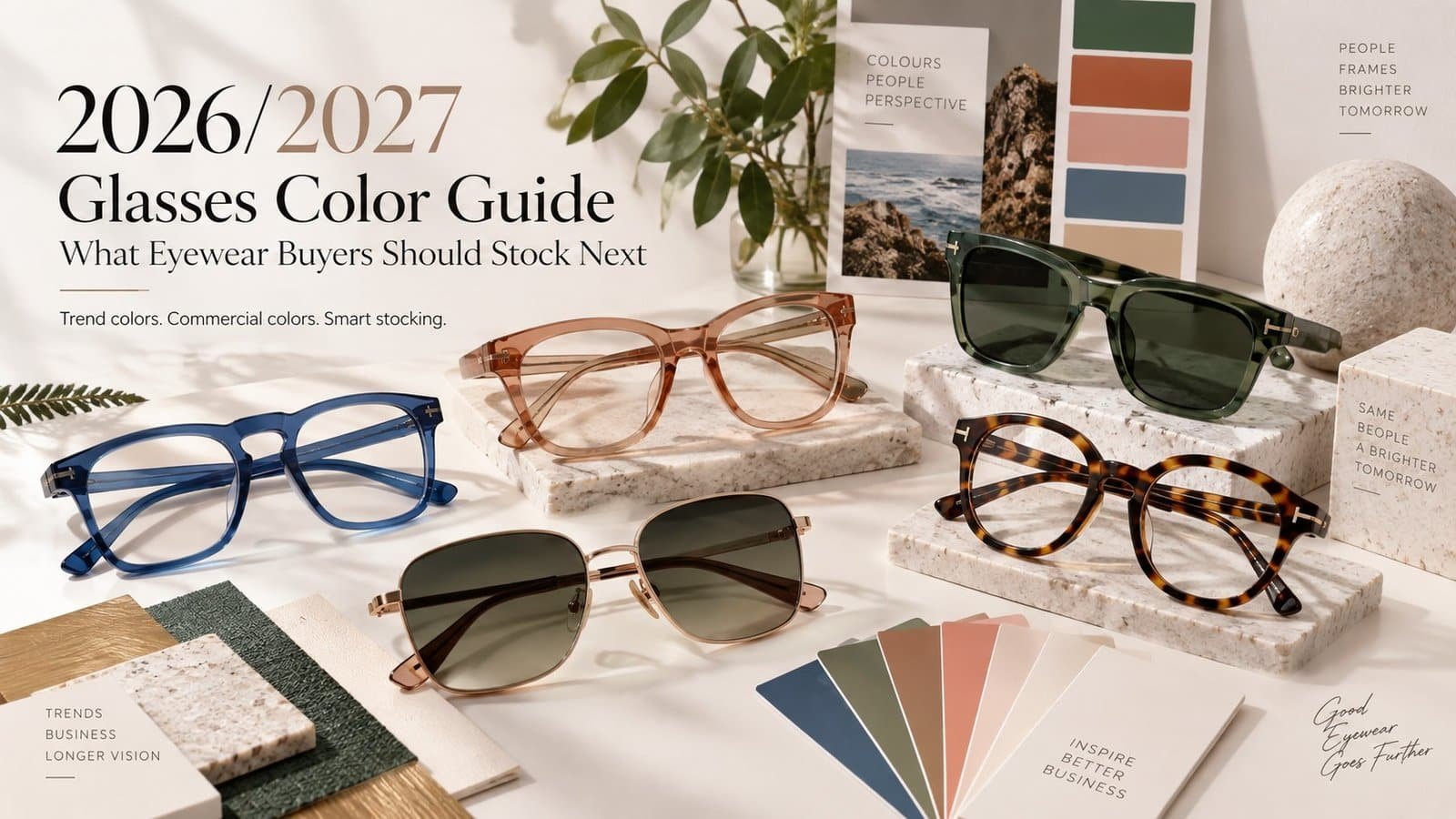
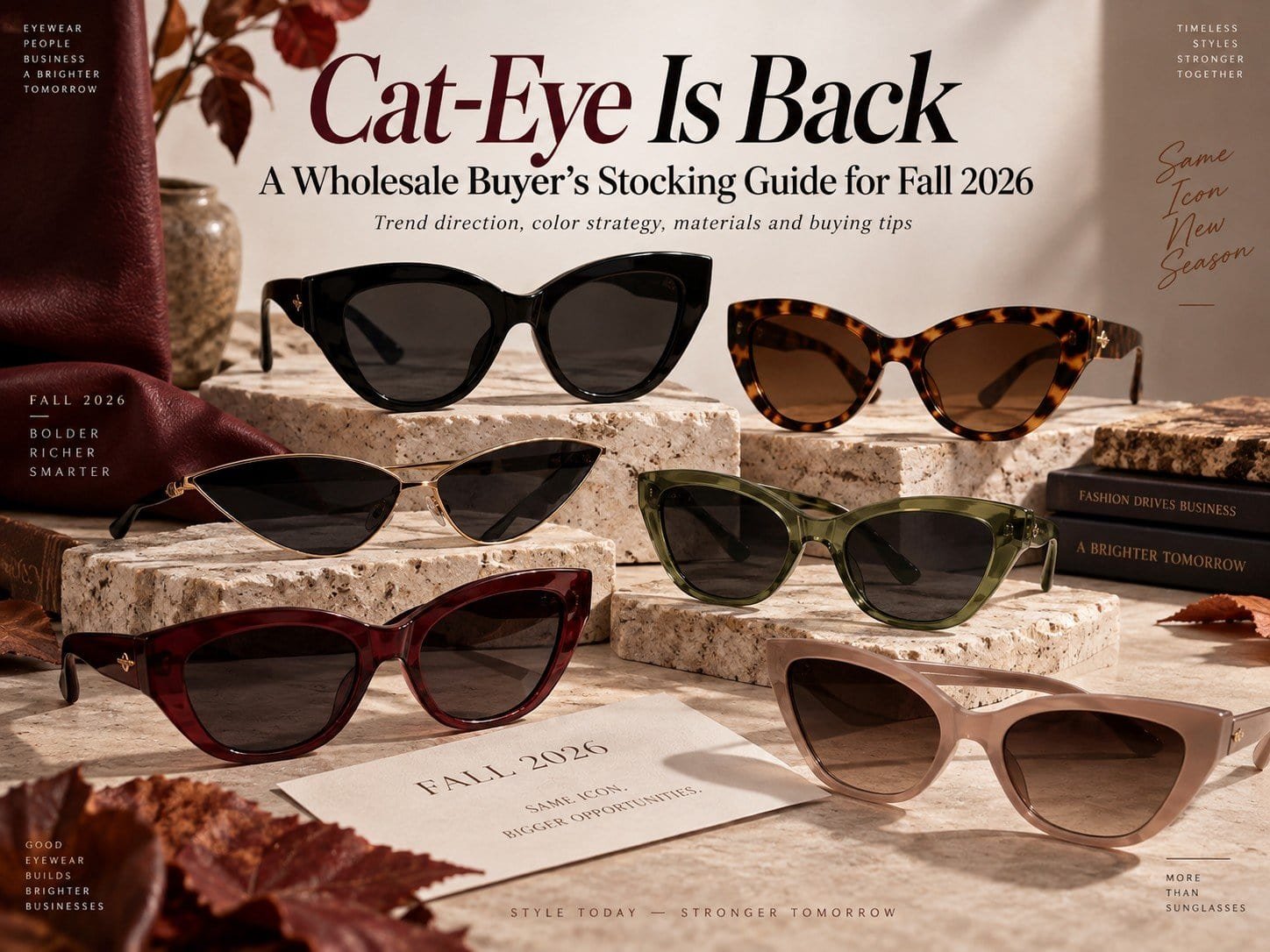
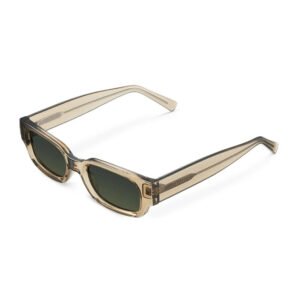
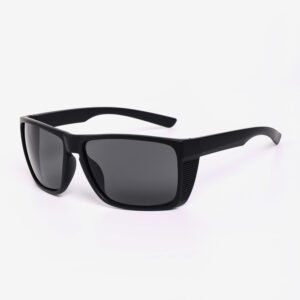
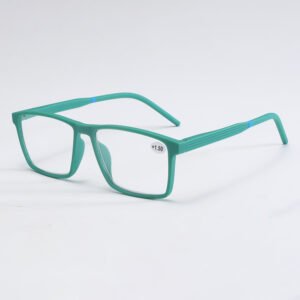
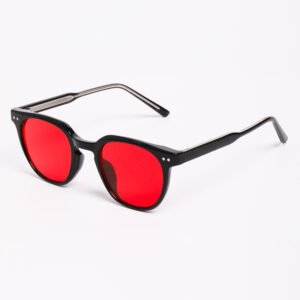
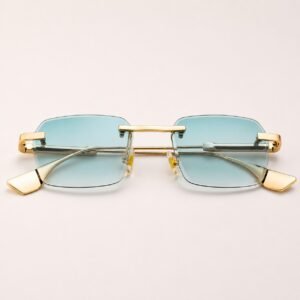
For 2026/2027, sunglasses are moving toward stronger, more expressive shapes. Cat-eye frames are commercially relevant because the newest versions are sharper, more sculptural and less costume-retro than earlier cycles, while oversized and shield styles remain visible too. For wholesale buyers, the safer move is not to bet on one “hero” frame, but to test cat-eye across several widths, materials and color depths.
Why Are Cat-Eye Sunglasses Relevant Again for 2026/2027?
The cat-eye is benefiting from two wider 2026 fashion signals: renewed interest in retro references and a stronger appetite for eyewear that makes a visible style statement.
Spring/Summer 2026 runway coverage already showed modern cat-eyes at Stella McCartney, Chloé and Bottega Veneta. Harper’s Bazaar described the 2026 update as sharper, more angular and more sculptural than traditional retro cat-eye frames. In other words, the silhouette has not simply returned unchanged. Designers have stretched the corners, strengthened the geometry and made the frame feel more graphic.
This matters commercially because “cat-eye” no longer refers to one narrow vintage look. A buyer can source a subtle upswept frame for everyday retail, a thick angular acetate style for fashion boutiques, or a slim metal version for a more refined collection.
The Fall/Winter 2026 color direction reinforces that flexibility. Pantone describes the season as balancing understated, authentic shades with more vivid and experimental colors. That mix gives buyers room to sell the same basic silhouette in both safer neutrals and smaller trend-led color runs.
Buying conclusion: treat cat-eye as a product family, not a single trend SKU.

Which Cat-Eye Shapes Are Most Worth Testing?
Not every customer wants a dramatic wing. The commercial opportunity comes from separating cat-eye sunglasses into clear shape groups.
| Cat-Eye Type | What It Looks Like | Commercial Role | Main Risk |
|---|---|---|---|
| Soft-Lift Cat-Eye | Slight upsweep, medium lens width, softer corners | Broad everyday style | Can look generic if the lift is too weak |
| Sharp Angular Cat-Eye | Narrower lens, clearly defined outer corner | Fashion-led hero style | Higher trend risk |
| Oversized Cat-Eye | Larger lens area with lifted corners | Premium or dressy positioning | Fit is less universal |
| Slim Metal Cat-Eye | Fine rim and lighter visual weight | Minimal or premium capsule | Less visual impact |
| Thick Acetate Cat-Eye | Sculpted front with visible thickness | Premium, design-led range | Higher cost and weight |
| Micro Cat-Eye | Very narrow lens with exaggerated wing | Trend or social-media capsule | Shorter commercial life cycle |
For a first buy, soft-lift and angular cat-eyes are worth separating.
The soft-lift frame answers the customer who likes the cat-eye effect but still wants an easy everyday product. The angular version serves the customer looking for something recognizably new.
One common wholesale mistake is ordering five cat-eye models that look different in a supplier catalog but become almost identical once placed on a retail display.
Before approving an assortment, compare:
- Total frame width
- Lens width and height
- Degree of outer-corner lift
- Front thickness
- Temple profile
- Overall visual weight
The objective is not to stock more styles. It is to make sure every style has a different job.

2026/2027 Colors: Which Are Commercial and Which Are Experimental?
Pantone’s New York Fashion Week Autumn/Winter 2026/2027 report provides a useful color signal.
The official palette includes grounded shades such as Muted Clay, Arabian Spice, Red Mahogany and Burnt Olive, alongside stronger colors including Festival Fuchsia, Acacia and All Aboard. Seasonless shades include Toffee, Underworld gray and Poseidon blue.
That does not mean eyewear buyers should reproduce each Pantone shade literally.
The better question is:
How can these color directions be translated into frames that people will actually wear?
| 2026/2027 Direction | Eyewear Translation | Buying Role |
|---|---|---|
| Black / Dark Tortoise | Gloss black, black-brown tortoise | Core commercial |
| Red Mahogany / Arabian Spice | Oxblood, deep brown, reddish tortoise | Strong fall commercial |
| Toffee / Muted Clay | Honey acetate, warm transparent brown | Commercial seasonal |
| Burnt Olive / Neptune Green | Smoky olive, translucent green | Controlled fashion test |
| Foxglove | Dusty mauve, muted rose | Feminine capsule |
| Festival Fuchsia / Acacia / Vivid Blue | Saturated statement frames | Experimental |
For most wholesale programs, the deepest stock should still sit in black, tortoise and warm brown, supported by one or two seasonal colors.
Olive, oxblood and muted mauve are useful middle-ground options: different enough to refresh the collection, but not so unusual that they require a highly fashion-driven customer.
Bright fuchsia, yellow-green or vivid blue are different. They can attract attention in product photography and retail displays, but they are better treated as controlled tests.
Use fashion colors to create the story. Use commercial neutrals to carry the volume.

Frame Material and Lens Choice Can Completely Change the Positioning
Two cat-eye sunglasses can share almost the same outline and still belong at very different retail price points.
That difference often comes from the frame material, finishing and lens specification.
Injection-Molded Plastic
PC and similar molded materials are practical when the buyer needs accessible pricing, lower product complexity and multiple fashion colors.
They work well for:
- Fast-fashion retailers
- Promotional programs
- Entry-price collections
- Trend testing
The commercial advantage is not simply “plastic is cheaper.” It is that buyers can often build a broader assortment without putting too much capital into each SKU.
Acetate
Acetate changes the visual value of a cat-eye frame.
Thicker rims, polished edges, transparent layers and richer tortoise patterns make the lifted outer corner appear more sculptural. That makes acetate particularly suitable for design-led and premium private-label collections.
Instead of selling only the silhouette, the brand can sell both shape and material character.
Metal
A thin metal cat-eye creates a completely different product.
The upward sweep becomes lighter and more refined rather than bold and retro. This makes metal useful for boutiques or brands that like the cat-eye direction but do not want a heavy acetate look.
Lens selection should reinforce the same positioning.
Gray or smoke lenses keep glossy black frames clean. Brown and amber lenses pair naturally with tortoise and warm autumn colors. Gradient lenses can soften highly angular frames and create a more fashion-led appearance.
Polarization can add functional value, but it should be selected because it makes sense for the customer and retail price—not simply because “polarized” sounds more premium.

How Should Buyers Build a Cat-Eye Assortment Without Overbuying?
Start with product roles, not colors.
A compact cat-eye assortment can contain four jobs:
- Core Seller — soft-lift black or tortoise.
- Fashion Driver — sharper, more sculptural cat-eye.
- Premium Option — thicker acetate or refined metal.
- Color Test — olive, oxblood, mauve or one brighter seasonal shade.
Suppose you are testing 100 units.
Splitting the order into ten colors of ten units may appear diversified, but the resulting sales data can become difficult to interpret. Did the frame fail because of its shape, its color, its price or simply insufficient exposure?
A more concentrated example might allocate 40 units to the core direction, 25 to a sharper fashion style, 20 to the premium version and 15 to one experimental color.
This is not a universal purchasing formula. It illustrates the principle:
Your first order should produce useful information, not just a large number of SKUs.
Choose Cat-Eye Styles by Sales Channel, Not Trend Alone
A frame that performs well in an Instagram campaign may not be the right frame for a pharmacy, optical store or general lifestyle retailer.
| Sales Channel | Safer Cat-Eye Direction | Why |
|---|---|---|
| Fashion Boutique | Sharp acetate, unusual colors, gradient lens | Customers expect stronger design |
| Optical Store | Softer lift, balanced proportions | Fit and wearability matter more |
| Lifestyle Retail | Medium acetate, black/tortoise plus seasonal color | Easier to merchandise broadly |
| Online DTC | Distinct front-view silhouette | Strong imagery helps product differentiation |
| Mass / Promotional Retail | Simpler construction, fewer colors | Price and stock depth matter more |
This is why following a trend report alone is not enough.
A wholesale buyer should be able to answer:
Where will this SKU be sold, who is expected to buy it, and what role does it play beside the other frames?
If those three answers are unclear, the style probably does not need to be in the first order.
MOQ, Trial Orders and Reorders: How to Control Fall Inventory Risk
Trend products become risky when the MOQ forces buyers to purchase more inventory than the market has validated.
The Vision Council’s Q2 2026 Consumer inSights research surveyed more than 12,000 U.S. adults and described consumers as deliberate in their eyewear spending. Spending remained distributed across value, mid-range and higher-price tiers rather than shifting entirely toward one level.
For buyers, that is another reason not to assume that a visible fashion trend automatically justifies maximum stock depth.
If an existing cat-eye model is available, a trial order can first answer:
- Does the silhouette sell?
- Which color receives the most orders?
- Can the target retail price be maintained?
- Which SKU needs replenishment first?
Deeper customization can follow the result.
A custom Pantone frame color, exclusive component, special lens specification or new mold will normally require a larger economic production quantity than simply adding a logo to an existing design.
Before approving the PO, ask your supplier:
- What exactly is driving this MOQ?
- Can we test an existing frame before developing an exclusive color?
- Can the winning color be reordered separately?
- What is the realistic reorder lead time?
The objective is not simply to find the lowest MOQ.
It is to find the lowest inventory risk that still produces useful sales data.
For a more detailed quantity strategy, internally link this section to Eyewear MOQ: What You Get at 50, 300 & 1000+ Pieces.
Customizing Cat-Eye Sunglasses for a Private-Label Collection
Customization works best when it makes the product positioning clearer.
For a private-label cat-eye program, buyers normally need to decide:
- Frame material
- Front shape
- Frame color
- Lens tint and function
- Logo method
- Packaging
Existing designs can often be adapted faster than completely new OEM development. Changes to front geometry, temple structure or molds require a deeper development process and normally higher commitment.
For a first seasonal collection, keep the concept disciplined.
One recognizable frame + two or three commercial colors + one distinctive brand detail can create a stronger identity than ten minor customization requests.
FAQ
Are Cat-Eye Sunglasses Still in Style for 2026/2027?
Yes. The 2026 interpretation is sharper and more sculptural than the classic mid-century cat-eye, although softer and thinner versions also remain relevant. Buyers should treat cat-eye as one important 2026/2027 eyewear direction rather than the only Fall/Winter trend.
Which Cat-Eye Color Is Safest for Wholesale?
Black and tortoise are practical starting points because they are easy to merchandise and work with multiple lens colors. Warm brown, oxblood, smoky olive and muted mauve can add a Fall 2026 update without taking the same risk as very bright fashion colors.
Should I Buy Micro Cat-Eye Sunglasses in Volume?
Usually not for the first test unless your customer base already buys narrow fashion frames. Micro cat-eyes photograph well, but their fit and styling are more selective. Treat them as a controlled trend SKU first.
Is Acetate Always Better Than Plastic?
No. Acetate makes sense when material depth, polishing and premium positioning matter. Injection-molded plastics may be more suitable when price, weight and assortment flexibility matter more.
Should Cat-Eye Sunglasses Be Polarized?
Not automatically. Polarization adds glare-reduction value and can support higher product positioning, but it also affects cost. Match the lens specification to the target customer, channel and retail price.
How Many Cat-Eye Styles Should a New Buyer Test?
There is no universal number. A small buyer usually learns more from several clearly differentiated shapes than from many near-identical frames. Start with a core commercial style, one stronger fashion style and one controlled color or material test, then reorder using actual sell-through data.
Conclusion: Capture the Trend, Not the Risk
Cat-eye sunglasses are worth testing for 2026/2027 because the silhouette has moved beyond one retro look. It now spans soft everyday frames, sharp sculptural acetate, slim metal and oversized statement versions.
The opportunity is not simply to “order more cat-eye.”
It is to choose the right cat-eye for your channel, customer and retail price, then keep the first order controlled enough to identify what actually deserves a reorder.
If you are building a 2026/2027 private-label collection, request three quotations:
Existing cat-eye + custom logo → Custom frame/lens color combination → Deeper OEM/ODM development
Compare the MOQ, unit cost, sampling requirement and lead time before committing your seasonal budget.
That way, you participate in the trend without letting the trend decide your inventory.