A successful eyewear wholesale collection needs more than attractive frames. Start with your target customers, select complementary frame shapes, offer different fitting sizes, and balance everyday styles with trend-driven designs. For most buyers, a focused collection of 10 well-selected SKUs is more useful than 30 similar frames that compete for the same customers.
The goal is simple: give retailers enough variety to serve different faces and preferences without creating unnecessary inventory.
Why Does an Eyewear Wholesale Collection Need Different Shapes and Sizes?
Imagine ordering 20 fashionable optical frames for your store. Most feature oversized square fronts, similar bridge widths, and identical temple lengths.
Your display looks full, but customers with narrow faces struggle to find a comfortable fit. Others want softer shapes or smaller frames. You have plenty of stock, yet limited choice.
This is why wholesale eyewear buyers should evaluate both frame shape and physical dimensions before placing an order.
Frame shape influences appearance. Frame size determines whether the product sits comfortably on the face.
A balanced collection should address three factors:
Shape diversity: Rectangle, square, round, oval, cat-eye, and other silhouettes provide different aesthetic options.
Fit diversity: Narrow, medium, and wide fitting options accommodate different facial proportions.
Commercial diversity: Everyday essentials support repeat purchases, while distinctive designs help attract new customers.
The Vision Council Foundation emphasizes that suitable eyewear depends on facial characteristics, frame size, personal style, and comfort.
For wholesale buyers, this creates an important purchasing principle: ten complementary styles may provide better customer coverage than twenty nearly identical models.

How to Choose Eyeglass Frames for Different Face Shapes
Face shape is a useful starting point for organizing an eyewear collection, but it should not become a rigid fitting rule.
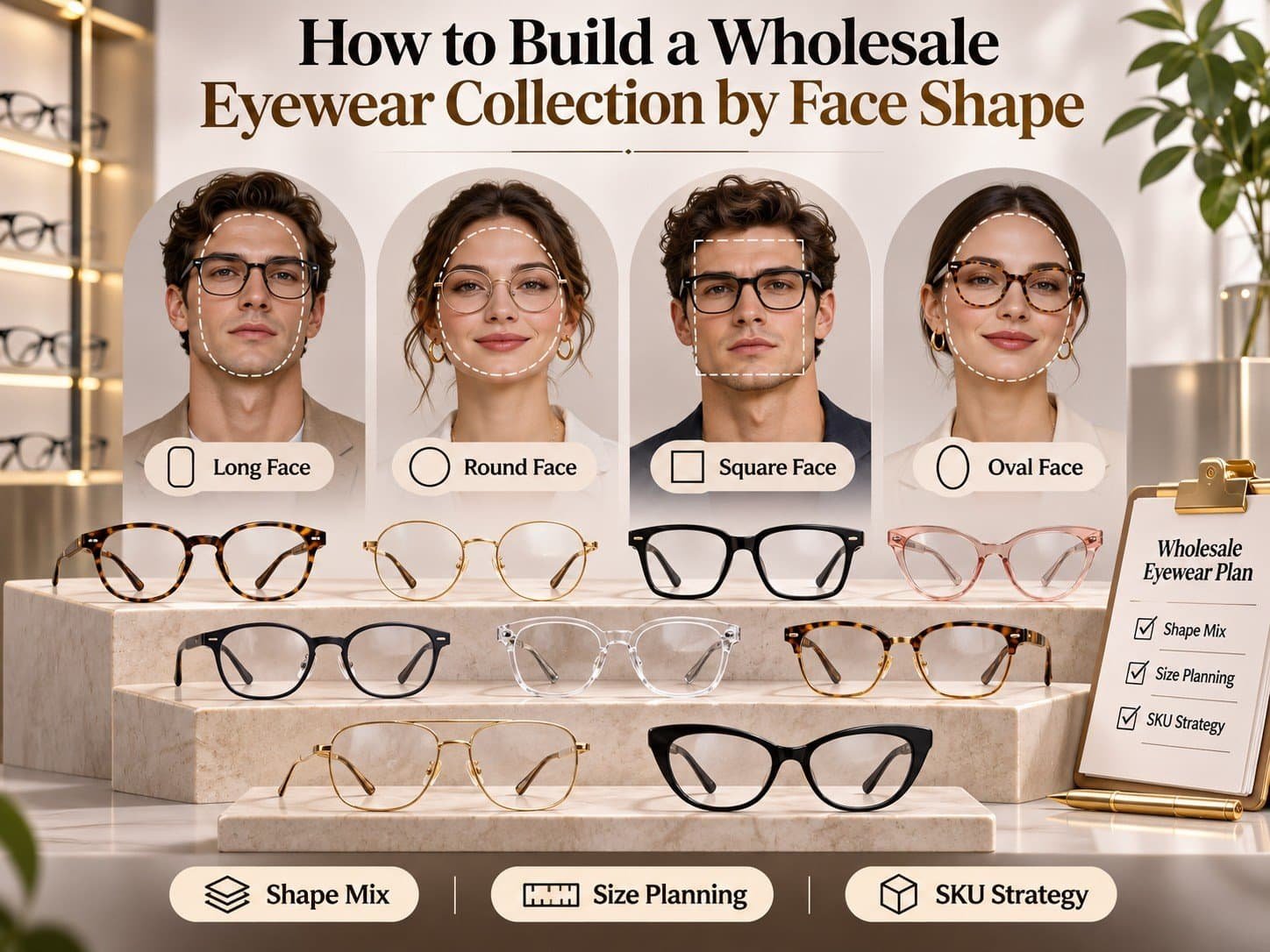
The four common groups below can help buyers identify useful frame silhouettes.
| Face Shape | Recommended Frame Styles | Selection Objective | What Buyers Should Avoid |
|---|---|---|---|
| Long/Oblong | Deep rectangles, oversized squares, browline frames | Add visual width and balance facial length | Stocking only very narrow, shallow frames |
| Round | Rectangles, angular squares, geometric frames | Introduce definition and contrast | Offering only small circular silhouettes |
| Square | Round, oval, soft cat-eye frames | Soften strong facial angles | Relying exclusively on sharp, heavy squares |
| Oval | Rectangles, squares, round, cat-eye | Offer versatile styling options | Ignoring overall frame proportions |
These are styling suggestions, not restrictions. A well-fitted frame that suits someone’s preferences can work regardless of face-shape category.
Long Faces: Prioritize Frame Depth and Balanced Proportions
Long faces generally have greater vertical length relative to width.
Frames with sufficient lens height can help create a more balanced appearance. Deep rectangular frames, softly oversized squares, and browline designs are useful starting points.
Wholesale buying tip: Include at least one medium-to-deep frame front rather than filling the collection with shallow rectangular designs.
Round Faces: Include Angular and Structured Frames
Round faces tend to have softer contours, making angular eyewear an appealing styling contrast.
Rectangle and square frames introduce defined lines. Geometric acetate frames can also provide a contemporary alternative.
Buyers can explore our wholesale rectangle eyeglasses frames as a starting point for this category.
Wholesale buying tip: Offer both thin, understated rectangles and more substantial acetate frames to cover different retail price positions.
Square Faces: Balance Strong Features With Curved Designs
Square faces often feature a prominent jawline and relatively angular contours.
Round metal frames, oval acetate frames, and softly curved cat-eye styles provide a contrasting shape.
However, selecting a round frame does not automatically guarantee comfort. Buyers must still evaluate bridge construction, frame width, and temple fit.
Consider including round acetate eyeglasses alongside lighter metal options.
Oval Faces: Offer More Styling Variety
Oval faces are commonly considered versatile for eyewear styling.
Rather than choosing one specific shape, buyers can experiment with classic rectangles, geometric frames, cat-eye designs, and bolder fashion silhouettes.
For retailers, these customers may be a useful audience for testing new collections.
Buying recommendation: Use face shape to guide visual assortment planning, but confirm actual fit through product measurements and sample evaluations.

Which Frame Measurements Matter Most When Buying Wholesale Eyeglasses?
A frame may look suitable in a product photograph but fit poorly once customers try it on.
This is why professional eyewear buyers should request complete frame specifications instead of relying on descriptions such as “medium fit” or “unisex size.”
A typical temple marking looks like this:
52 □ 18–145
It represents a lens width of 52 mm, a nominal distance between lenses of 18 mm, and a temple length of 145 mm.
| Measurement | What It Means | Why Wholesale Buyers Need It |
|---|---|---|
| Lens Width | Horizontal lens size | Affects the proportions of the frame and lens |
| Bridge Size | Nominal distance between lenses | Helps compare frame geometry, but does not alone determine nose fit |
| Temple Length | Length of the side arm | Affects positioning around the ears |
| Overall Front Width | Width across the frame front | Helps distinguish narrow, regular, and wide-fitting designs |
| Lens Height | Vertical lens dimension | Important when evaluating certain prescription lens designs |
| Bridge Construction | Nose-contact geometry and pad design | Influences stability, pressure, and comfort |
Why Overall Frame Width Matters More Than Buyers Expect
Two frames can have identical 52–18–145 markings but different overall widths.
This happens because endpiece dimensions, rim thickness, and frame geometry vary between models.
Buyer question: “Can I calculate the exact frame width from the three printed measurements?”
No. Lens width and bridge dimensions alone do not account for the entire front construction. Ask your supplier for the measured overall width.
A second consideration is lens compatibility. For prescription collections, confirm whether the frame provides sufficient dimensions and appropriate construction for the intended lens types.
Progressive lenses, for example, require enough usable fitting height for the specific lens design. Final suitability should be confirmed with the optical laboratory or dispensing professional.
Before ordering wholesale eyeglass frames, request technical drawings and actual measurements in millimeters.

How to Plan Eyewear SKUs by Gender, Age, and Regional Demand
Different customer groups may prefer different eyewear designs, but demographics alone are not reliable purchasing instructions.
A better approach combines customer profiles with retail sales information.
Gender: Build Around Style and Fit, Not Labels
Instead of creating completely separate collections for men and women, buyers can start with versatile unisex designs.
Classic rectangles, round metal frames, and neutral acetate styles can reach multiple customer groups.
Where sales data supports the demand, add distinctive cat-eye designs, oversized frames, or wider structured silhouettes.
The important distinction is that gender labels do not determine physical fit. A narrow-fitting design may be suitable for customers of any gender.
Age: Consider Lifestyle and Lens Requirements
Younger fashion-focused customers may be interested in experimental colors, slim rectangles, or oversized designs.
Customers seeking everyday optical eyewear may prioritize comfort, durability, and versatility.
Retailers serving progressive-lens wearers should pay particular attention to lens height, usable fitting dimensions, and frame stability.
These are potential customer needs, not assumptions about everyone within an age group.
Region: Use Local Sales Data Instead of Stereotypes
A European boutique, a U.S. optical chain, and a Southeast Asian online retailer may require very different assortments.
However, geography alone cannot predict face size or style preferences.
Buyers should examine local bestselling measurements, customer returns, preferred colors, retail price ranges, and fitting feedback.
For example, if a retailer repeatedly receives complaints about frames slipping down the nose, the next collection may need alternative bridge constructions or adjustable nose pads.
Practical recommendation: Start with a broad assortment and adjust the size mix based on verified demand from each target market.

How to Balance Classic Eyewear Styles With Trend-Driven Designs
Fashionable eyewear helps attract attention, but a collection built entirely around trends can create inventory risk.
Classic shapes provide continuity. Trend-driven designs introduce freshness and differentiation.
For an initial collection, consider the following planning model:
| Category | Share of Styles | Examples | Commercial Purpose |
|---|---|---|---|
| Classic Core | 70% | Rectangles, squares, round, oval, browline | Establish a dependable everyday assortment |
| Trend Test | 30% | Narrow retro rectangles, bold geometric, oversized acetate | Test new customer preferences |
The 70/30 split is a suggested assortment framework, not an industry sales statistic.
There is also an important difference between the number of styles and the number of units ordered.
A collection may contain seven classic SKUs and three experimental SKUs, but the buyer could allocate 80% of initial units to classic products and 20% to trend tests.
This reduces exposure to unproven styles while allowing retailers to collect meaningful sales feedback.
After the first selling period, adjust replenishment according to sell-through, customer demand, and remaining stock.

Example: Building a 10-SKU Wholesale Eyewear Collection
Consider a retailer launching a small optical eyewear collection for adult customers.
The objective is to offer different shapes, fit ranges, and styling choices without unnecessarily expanding inventory.
The following table provides a practical starting assortment.
| SKU | Frame Style | Suggested Size (mm) | Fit Segment | Suggested Face-Shape Focus | Role |
|---|---|---|---|---|---|
| 01 | Soft Rectangle | 49–19–140 | Narrow | Round, Oval | Classic |
| 02 | Square Acetate | 52–18–145 | Medium | Round, Oval | Classic |
| 03 | Deep Rectangle | 54–18–145 | Wide | Long, Oval | Classic |
| 04 | Round Panto | 49–20–140 | Narrow | Square, Oval | Classic |
| 05 | Oval Metal | 51–19–145 | Medium | Square, Long | Classic |
| 06 | Browline | 52–19–145 | Medium | Long, Oval | Classic |
| 07 | Soft Cat-Eye | 52–17–145 | Medium | Square, Long | Classic |
| 08 | Slim Retro Rectangle | 50–19–145 | Medium | Round, Oval | Trend |
| 09 | Oversized Geometric | 54–20–145 | Wide | Long, Oval | Trend |
| 10 | Bold Round Acetate | 51–20–145 | Medium | Square, Oval | Trend |
Note: All sizes are illustrative planning examples, not measurements of confirmed products. Narrow, medium, and wide are provisional fitting categories that must be validated against actual front widths, bridge shapes, and wearer tests.
What Does This 10-SKU Collection Achieve?
First, the collection includes seven classic designs and three trend-oriented designs.
Second, it provides two narrow-fit options, six medium-fit options, and two wide-fit options.
Third, no single face-shape category dominates the entire assortment.
Most importantly, each frame serves a distinct commercial purpose rather than simply adding another product photograph to the catalog.
How Should Buyers Select Colors and Quantities?
Start with one commercially relevant color per model, then add additional colors after identifying strong-selling designs.
Black, tortoiseshell, transparent neutrals, and understated metal finishes are reasonable initial candidates, subject to local demand.
Remember that one frame in two colors usually represents two separate inventory SKUs.
For example, ten frame models offered in three colors each create 30 SKUs, before adding size variations.
This can quickly increase purchasing commitments, storage requirements, and replenishment complexity.
Buyers who want more options can begin with existing models and explore wholesale optical eyewear before investing in entirely new frame development.
Frequently Asked Questions About Wholesale Eyewear Collections
1. How Many Styles Should a New Eyewear Retailer Start With?
Ten carefully selected SKUs can provide a manageable pilot assortment for a small retailer.
The ideal number depends on customer demand, available display space, budget, and supplier MOQ requirements.
Focus on covering distinct customer needs rather than reaching an arbitrary style count.
2. Which Eyeglass Frame Shape Sells Best?
There is no universal best-selling frame shape across every market.
Rectangles, squares, and rounded designs are useful categories for a core collection, but actual demand should be confirmed using your store’s sales data.
A bestselling style in one retail channel may perform poorly in another.
3. Should I Order More Frame Colors or More Sizes?
If your existing range has fitting gaps, prioritize size and bridge-fit diversity.
If fit coverage is already strong, adding colors to successful models may be a more efficient way to expand the assortment.
Avoid purchasing multiple colors of an untested design simply to increase the number of displayed products.
4. Can the Same Eyewear Collection Work for Different Countries?
The same core designs may serve multiple markets, but product selection should be validated locally.
Check customer fit feedback, preferred price points, applicable regulations, and local sales performance before duplicating an assortment.
5. Should I Choose Ready-Stock Frames or Custom OEM/ODM Eyewear?
Ready-stock eyewear is useful for testing designs without committing immediately to new mold development.
Private-label customization allows buyers to introduce branded frames using existing designs.
Full OEM/ODM development becomes more relevant when a business needs unique frame structures, proprietary sizing, or distinctive brand features.
Buyers can compare these approaches through our OEM/ODM eyewear manufacturing services.
Conclusion: Build Your Eyewear Collection Around Customers, Not Just Trends
A successful wholesale eyewear collection is not measured by the number of styles in a catalog.
It is measured by how effectively those styles meet customer needs.
Combining different frame silhouettes, fitting sizes, suitable materials, and thoughtful inventory allocation helps retailers create a more complete assortment without taking unnecessary stock risks.
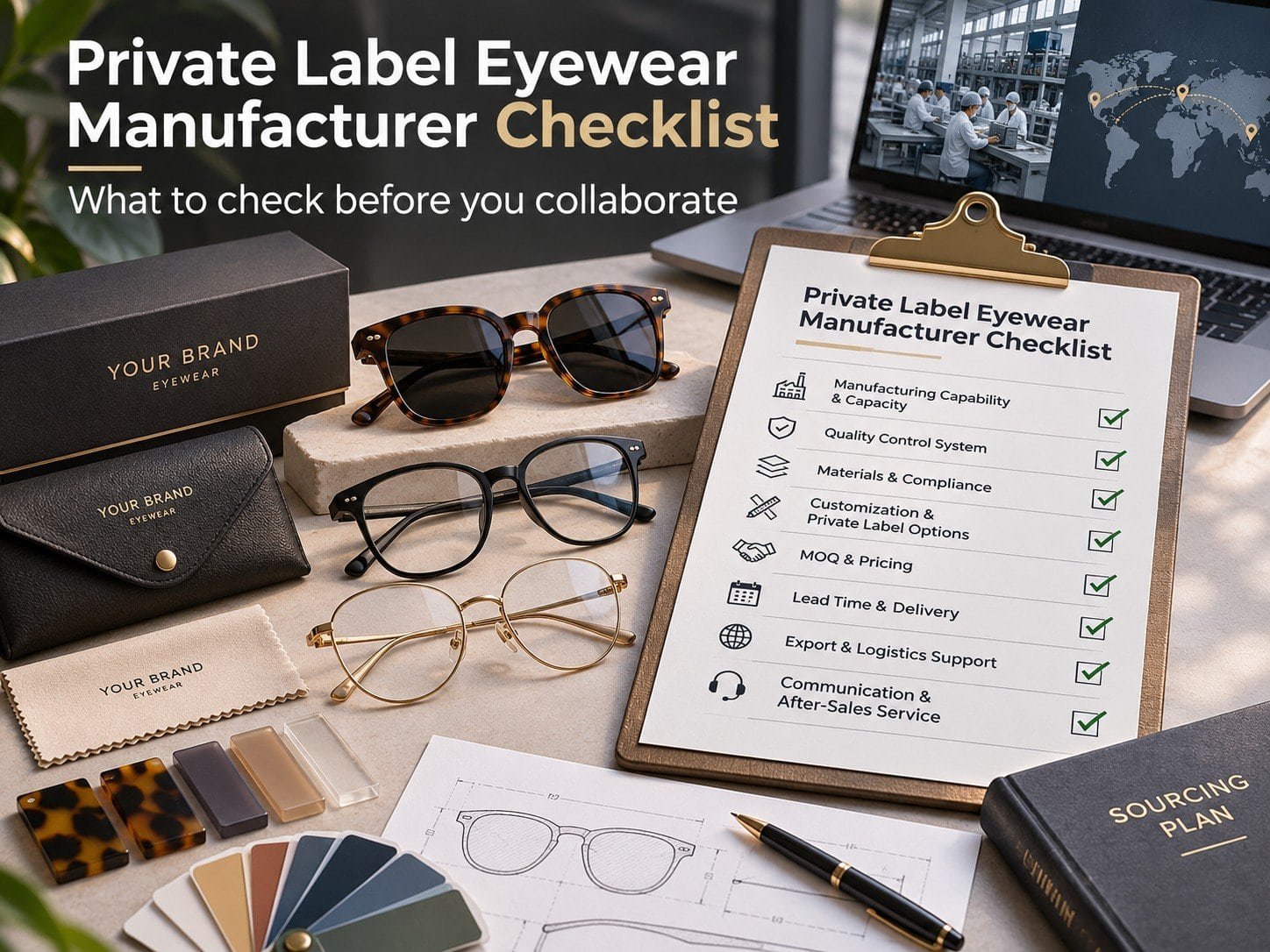
At LUBA EYEWEAR, we help eyewear retailers, brand owners, and wholesalers develop collections through ready-stock sourcing, private-label customization, and OEM/ODM manufacturing.
Our one-stop service covers frame selection, design modifications, sample development, manufacturing, quality control, branded packaging, and international delivery.
Ready to build your next wholesale eyewear collection?
Send us your target market, preferred frame styles, approximate quantities, and retail price range. Our team can help you compare three sourcing approaches: ready-stock wholesale, private-label customization, and custom OEM/ODM development.

Lorem ipsum dolor sit amet, consectetur adipiscing elit. Ut elit tellus, luctus nec ullamcorper mattis, pulvinar dapibus leo.