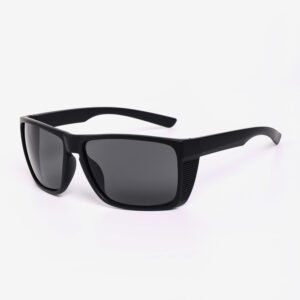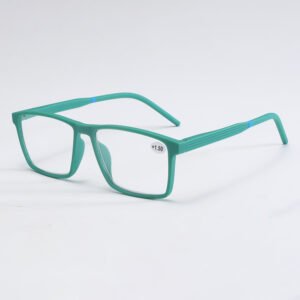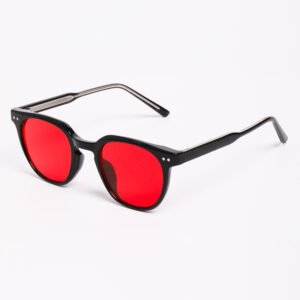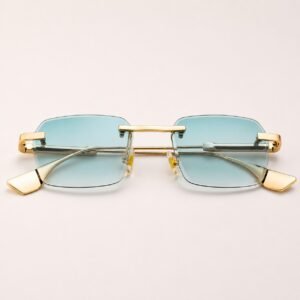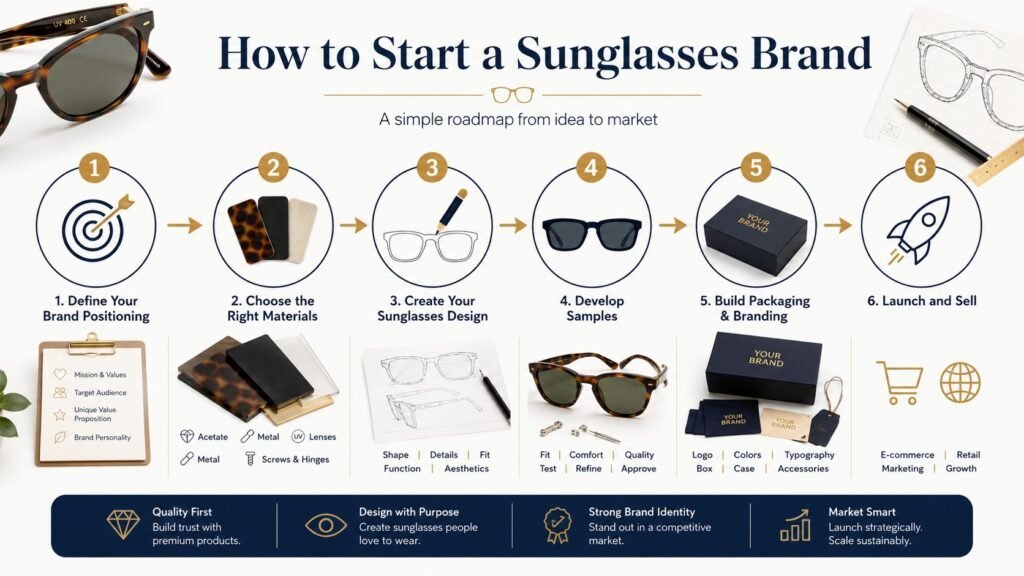
Starting a sunglasses brand sounds exciting. You imagine your logo on the temple, your colors on the frame, your packaging on the shelf, and customers wearing your designs in summer photos, sports events, beach clubs, or fashion stores.
But once you begin sourcing, the process quickly becomes more complicated.
- Which frame material should you choose?
- How much should you invest in samples?
- Should you start with ready-made styles or open a new mold?
- What kind of supplier can actually support a growing brand instead of just selling you random products?
If you are searching for how to start a sunglasses brand, the real answer is not simply “find a factory and place an order.” The smarter path is to build your brand from the inside out: understand your target market, choose the right product direction, select suitable materials, test samples carefully, and work with a supplier who can help you scale.
This guide will walk you through the practical steps to start a sunglasses brand with fewer mistakes and better product decisions.
1. Start with Your Brand Image Before Choosing Products
Many new sunglasses brands make the same mistake: they pick styles first and think about the brand later.
They browse a catalog, choose several trendy models, add a logo, and hope the market will respond. Sometimes this works for a short-term promotion, but it rarely creates a strong brand.
Before you choose sunglasses, ask yourself:
- What kind of image do I want customers to remember?
- Am I building a fast fashion brand, a sports performance brand, or a premium lifestyle brand?
- Will my customers care more about color, function, comfort, price, or luxury feeling?
- Will I sell online, through boutiques, at events, or through wholesale channels?
Your brand positioning directly affects your material choice, frame structure, lens function, packaging, price range, and even your marketing photos.
- A fast fashion sunglasses brand needs speed, color variety, and cost control.
- A sports sunglasses brand needs flexibility, impact resistance, secure fit, and lightweight comfort.
- A premium sunglasses brand needs better texture, refined finishing, and a material that feels valuable in hand.
Once your brand image is clear, your product decisions become much easier.

2. For a Fast Fashion Sunglasses Brand, PC Is Often the Smart First Choice
If your goal is to launch a fast fashion sunglasses brand, PC is usually one of the most practical materials to consider.
PC, short for polycarbonate, is widely used in sunglasses because it is lightweight, cost-effective, and suitable for colorful designs. For brands that want to release seasonal collections, trendy colors, festival styles, beachwear sunglasses, Y2K-inspired frames, or promotional collections, PC can give you strong flexibility in product development.
Fast fashion sunglasses usually win through visual impact. Customers are attracted by color, shape, trend, and price. They may buy several pairs for different outfits, holidays, or social media looks. In this business model, your brand needs more SKUs, faster updates, and lower production risk.
PC frames support a wide range of colors and finishes. You can develop transparent colors, bright solid colors, candy tones, tortoise effects, gradient styles, and playful fashion looks. This is especially useful if your brand sells through e-commerce, pop-up shops, beach stores, or youth fashion channels.
Another advantage is cost control. When you are still testing the market, you may not want to invest heavily in expensive materials or complex structures. PC sunglasses allow you to launch more styles with a more manageable budget.
However, PC is not the best answer for every brand. It may not deliver the same premium hand-feel as acetate, and it may not offer the same flexibility as TR90. That is why your brand direction matters. For fast fashion, trend-driven retail, and price-sensitive markets, PC can be a very smart starting point.
3. For a Sports Sunglasses Brand, TR90 Gives You Flexibility and Safety
If you want to build a sports sunglasses brand, your first priority should not be only appearance. It should be performance.
Sports customers care about comfort, weight, durability, flexibility, and safety. Whether your sunglasses are used for cycling, running, hiking, fishing, outdoor training, or active travel, the frame must stay comfortable and reliable during movement.
This is where TR90 becomes a strong choice.
TR90 is known for being lightweight, flexible, and resistant to deformation. Compared with more rigid materials, it can bend more easily and return closer to its original shape. For sports sunglasses, this flexibility helps improve wearing comfort and reduces the chance of the frame feeling too tight or breaking under pressure.
A sports sunglasses brand should think about real use scenarios. Will the customer wear the sunglasses for several hours? Will they sweat? Will the sunglasses sit securely on the face? Will the temples feel comfortable around the ears? Will the frame hold up during outdoor activity?
TR90 can help answer many of these concerns. It is suitable for wrap-around frames, lightweight outdoor styles, flexible temples, and performance-oriented designs. It can also be combined with functional lenses such as polarized lenses, mirror lenses, UV400 lenses, or different color tints for specific outdoor environments.
For sports brands, safety is also part of brand trust. Customers do not only buy the look; they buy confidence. A frame that feels light, flexible, and secure gives your product a stronger professional impression.
If your brand story is about movement, endurance, performance, outdoor freedom, or active lifestyle, TR90 should be high on your material list.
4. For a Premium Sunglasses Brand, Acetate Creates a Luxury Experience
If your goal is to build a high-end sunglasses brand, acetate is often the material that gives your product the strongest premium identity.
Acetate has a richer texture than ordinary plastic materials. It can create deep colors, layered patterns, marble effects, tortoise tones, transparent luxury colors, and polished finishes that feel more refined. When customers hold acetate sunglasses, they can usually feel the difference immediately.
Premium brands are not only selling eye protection. They are selling taste, craftsmanship, identity, and lifestyle.
Acetate is especially suitable for classic square sunglasses, thick-frame designs, vintage styles, luxury optical-sun collections, fashion boutique eyewear, and private label brands targeting higher price points. It allows your sunglasses to look more substantial and more valuable in product photos and in hand.
Another advantage of acetate is its strong design expression. High-quality acetate sheets can show layered colors and unique patterns that make each frame feel more distinctive. For brands that want to avoid looking like generic mass-market sunglasses, acetate offers more room to build a recognizable identity.
Of course, acetate usually requires a higher budget and more careful production control. Polishing, fitting, hinge assembly, lens cutting, and quality inspection all affect the final result. This is why choosing the right supplier becomes even more important.
If your brand wants to communicate luxury, craftsmanship, boutique quality, or long-term value, acetate is often worth the investment.
5. Decide Whether to Start with Ready-Made Styles or Custom Development
After choosing your brand direction and material, the next question is whether to use existing styles or develop custom designs.
For most new sunglasses brands, starting with ready-made styles is usually safer. You can choose proven frame shapes, customize the logo, adjust lens colors, select packaging, and launch faster. This helps reduce development cost and allows you to test what your customers actually like.
Ready-made styles are suitable if:
- You are launching your first collection.
- You want to test several product directions.
- You need faster delivery.
- You have a limited initial budget.
- You want to reduce mold development risk.
Custom development is more suitable when you already know your market clearly or want to build a unique signature style. This may involve 2D drawings, 3D samples, mold development, specific sizing, custom hinges, exclusive colors, or special lens combinations.
Custom designs can make your brand more unique, but they also require more planning. You need to confirm dimensions, face fit, material choice, structure, sample approval, and production details before mass production.
A good supplier should not push you into the most expensive option immediately. Instead, they should help you choose the most practical path based on your stage, budget, and sales channel.
6. Build Your First Collection Around a Clear Customer Group
One of the biggest mistakes new brands make is launching a collection that tries to serve everyone.
A better approach is to build your first collection around one clear customer group.
For example:
- A beachwear brand may focus on colorful PC sunglasses with bold lenses and fun packaging.
- A cycling brand may focus on lightweight TR90 sports frames with polarized or mirror lenses.
- A boutique fashion brand may focus on acetate frames with classic colors and premium cases.
- A youth streetwear brand may focus on Y2K shapes, rimless styles, and bright seasonal colors.
- A resort or travel brand may focus on lightweight, easy-to-wear designs with UV400 protection.
When your first collection has a clear audience, your marketing becomes easier. Your product photos, website copy, packaging, social media content, and wholesale pitch all point in the same direction.
You do not need 100 styles to start. You need the right styles.
A focused collection with 6 to 12 strong models can often perform better than a messy collection with too many unrelated designs.
7. Do Not Ignore Lens Quality and Function
Frames create the first impression, but lenses affect the actual wearing experience.
When starting a sunglasses brand, lens selection should match your product positioning. Basic fashion sunglasses may use colorful lenses for style. Outdoor sunglasses may need polarized lenses to reduce glare. Sports sunglasses may use PC lenses for impact resistance and lightweight performance. Premium sunglasses may use higher-quality lens options to match the frame value.
Common lens options include:
- UV400 lenses for daily sun protection.
- Polarized lenses for glare reduction.
- Mirror lenses for outdoor and fashion styles.
- Gradient lenses for lifestyle and boutique looks.
- PC lenses for lightweight and sporty use.
- TAC lenses for polarized sunglasses with good value.
- Nylon or CR39 lenses for specific higher-end applications.
Do not treat lenses as a small detail. For many customers, lens comfort decides whether they will buy again.
If your supplier can help you match frame material, lens function, and target price, you will avoid many costly mistakes.
8. Sampling Is Where Good Brands Save Money
Some new buyers want to skip samples to save time and cost. In reality, samples often save money.
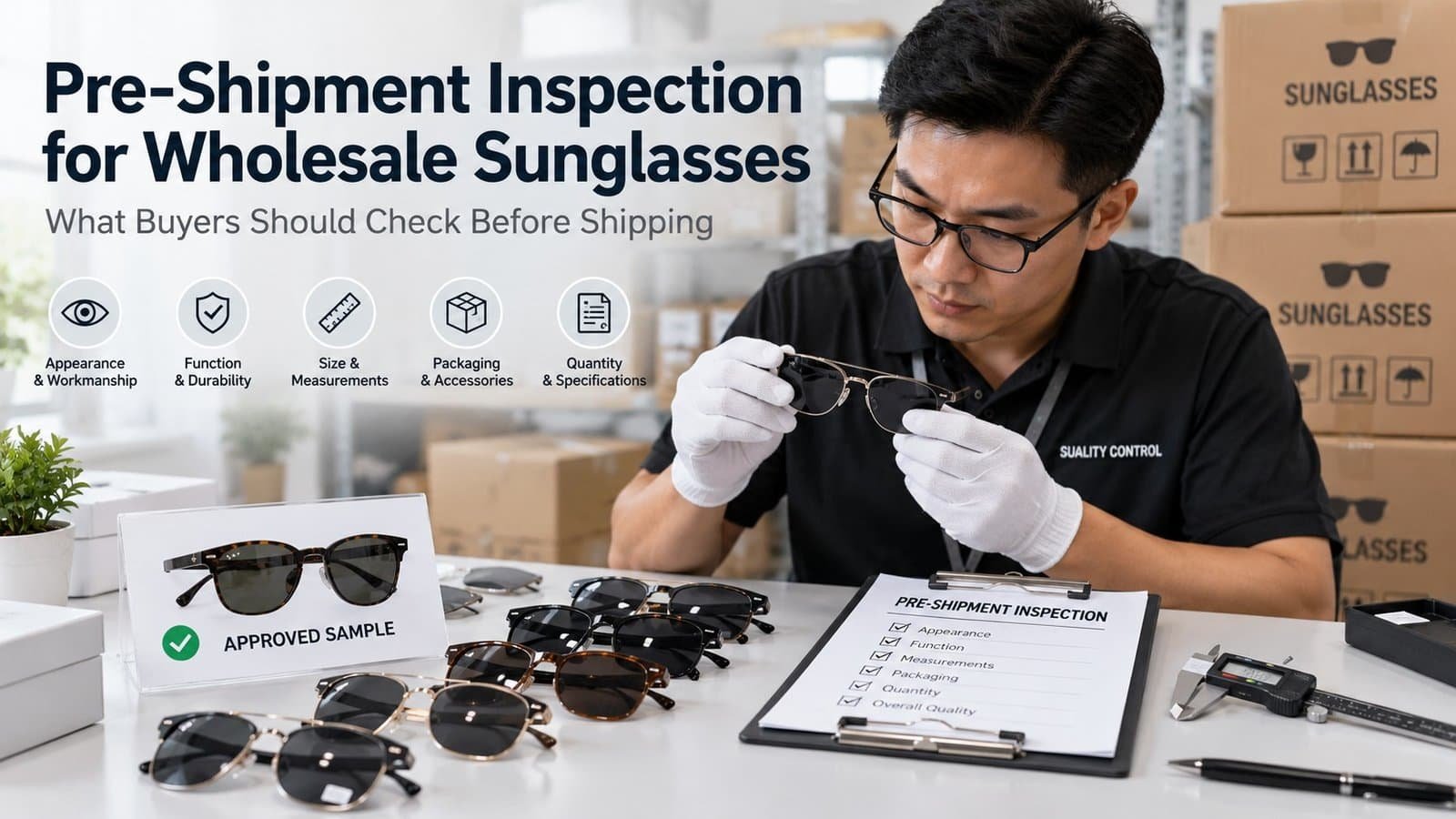
A sample helps you check the frame shape, weight, fitting, hinge quality, logo effect, lens color, packaging, and overall brand feeling before mass production. Photos are useful, but they cannot fully replace holding the product in your hand.
When checking samples, pay attention to:
- Does the frame feel aligned and balanced?
- Is the temple opening smooth?
- Does the logo look clean and correctly positioned?
- Is the lens color consistent with your brand image?
- Does the material feel suitable for your target price?
- Does the packaging match the product level?
- Would your customer feel the product is worth the price?
Sampling is also the stage where you can adjust details. Maybe the lens should be darker. Maybe the logo should be smaller. Maybe the frame color looks better in matte finish. Maybe the packaging needs a more premium touch.
Good sampling decisions can improve your final collection before you spend money on bulk production.
9. Choose a Supplier Who Understands Brand Building, Not Just Production
When learning how to start a sunglasses brand, supplier choice is one of the most important decisions you will make.
A basic supplier may only ask: “Which model do you want?”
A better supplier will ask:
- What market are you selling to?
- What price range are you targeting?
- What brand style do you want to create?
- Do you need PC, TR90, acetate, or a mixed collection?
- Do you need logo customization, packaging, lens upgrades, or product photos?
- Are you testing the market or preparing for wholesale distribution?
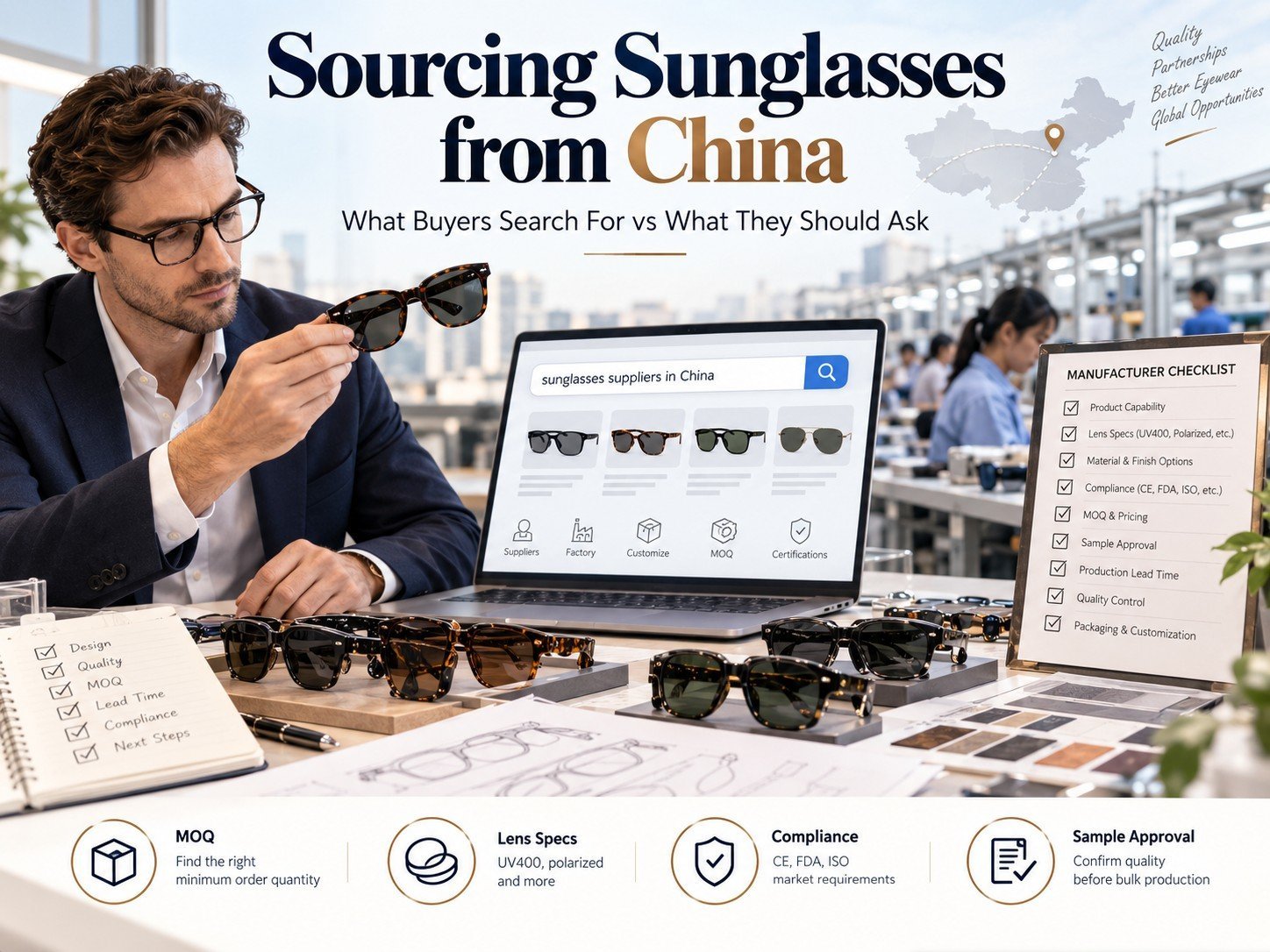
For a new sunglasses brand, you need more than a product list. You need guidance, sampling support, customization ability, production control, and stable communication.
Look for a supplier who can support:
- Frame material recommendations.
- Logo customization.
- Lens color and function matching.
- Private label packaging.
- Ready-made and custom designs.
- Sample development.
- Quality inspection.
- Flexible collection planning.
- Reliable production timelines.
This is especially important if you plan to grow from small orders into repeat wholesale orders. Your supplier should be able to support your brand at each stage, not only sell one batch and disappear.
10. Plan Your Packaging and Brand Details Early
Packaging is often where a new sunglasses brand starts to feel real.
Even if your first collection uses ready-made frame styles, custom packaging can immediately increase perceived value. A pouch, case, cleaning cloth, box, hang tag, barcode label, or thank-you card can make the product feel more complete.
Your packaging should match your positioning.
- A fast fashion brand may use colorful pouches and playful cards.
- A sports brand may use practical cases and functional product information.
- A premium brand may use stronger cases, refined cloths, and minimalist branding.
Do not overcomplicate packaging at the beginning. Start with practical branded elements that improve customer experience and product presentation. As your sales grow, you can upgrade packaging step by step.
11. Think About MOQ, Inventory, and First Order Strategy
Your first order should balance ambition with control.
Ordering too little may make your cost too high and limit your launch impact. Ordering too much may create inventory pressure before you know which styles sell best.
A practical first collection strategy is to choose a limited number of styles, test different colors, and focus on the products most aligned with your brand image. You can start with smaller quantities for market testing, then reorder the best-selling models.
For example:
- A fast fashion brand may test more colors in PC frames.
- A sports brand may test fewer styles but focus on comfort and lens function.
- A premium brand may start with a tight acetate collection and strong visual presentation.
The goal is not just to place an order. The goal is to create a product line that gives you data, feedback, and confidence for the next collection.
12. Turn Your Supplier Into a Product Development Partner
The best sunglasses brands do not treat suppliers as simple vendors. They treat them as product development partners.
A professional eyewear supplier can help you avoid wrong material choices, unsuitable lens combinations, weak logo effects, poor packaging decisions, and unrealistic production expectations.
At LBAshades, we support sunglasses brands with material selection, style matching, logo customization, lens options, packaging solutions, and production guidance. Whether you want to create a colorful fast fashion line with PC frames, a flexible sports collection with TR90, or a premium acetate sunglasses brand, the right development plan can make your launch smoother and more competitive.
Starting a sunglasses brand is not about guessing what might sell. It is about making clear decisions: who your customer is, what your brand stands for, which material supports that image, and which supplier can help turn your idea into a sellable product.
Final Thoughts: Build a Brand, Not Just a Product
If you are serious about starting a sunglasses brand, do not begin with random styles. Begin with positioning.
- Choose PC if your brand needs color, speed, and fast fashion appeal.
- Choose TR90 if your brand focuses on sports, movement, flexibility, and safety.
- Choose acetate if your brand wants a premium look, luxury texture, and long-term brand value.
The right material will shape your product experience. The right design direction will shape your customer perception. The right supplier will shape your launch success.
Ready to develop your own sunglasses collection?
Contact LBAshades to discuss your brand positioning, material options, logo customization, packaging, and first collection plan. Our team can help you choose the right sunglasses solution for your market and turn your brand idea into a product your customers will want to wear.