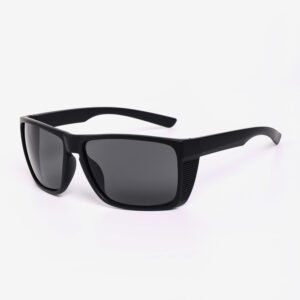
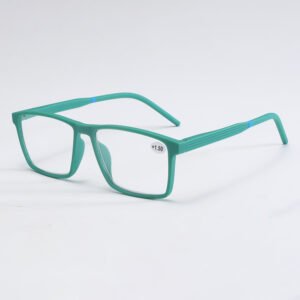
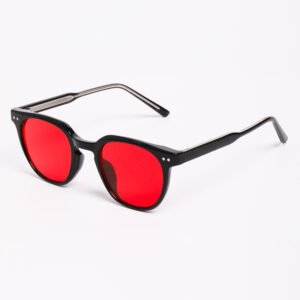
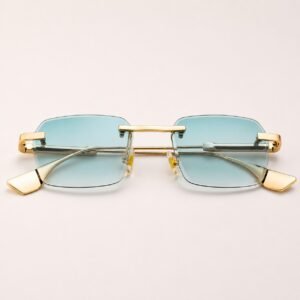
An eyewear sample lets you verify the frame, fit, lens, material, logo, finish, and packaging before committing to bulk production. But the right sample depends on what you need to prove.
If you only want to check a supplier’s workmanship, a stock sample may be enough. If you need to approve your logo, Pantone color, lens treatment, or custom frame structure, you need a different sampling process.
The key rule is simple:
Do not ask, “Can you send me a sample?”
Ask, “What must this sample prove before I am comfortable placing the bulk order?”
That question can save weeks of unnecessary development and prevent expensive changes after production starts.
First Decide What You Need the Sample to Prove
A sample should answer a specific purchasing question.
For example:
If you are comparing three potential eyewear suppliers, you may only need to check general workmanship, hinge quality, lens clarity, frame finishing, and material feel.
If you have already selected a supplier and want your logo added to an existing frame, you need to verify logo size, location, color, and durability.
If you are developing an entirely new pair of sunglasses, your sample must prove much more: dimensions, fit, curvature, temple angle, lens shape, material, color, hardware, branding, and manufacturing feasibility.
This creates three different approval levels:
- Product approval — Is the frame itself suitable?
- Customization approval — Is your branding and specification correct?
- Production approval — Can this exact specification become the standard for mass production?
Do not pay for level-three development when you are still making a level-one decision.

What Types of Eyewear Samples Can You Request?
“Eyewear sample” is not one single product.
For B2B eyewear purchasing, we normally separate sampling into five practical categories.
| Sample Type | What It Helps You Verify | Typical Buyer Situation | Production Ready? |
|---|---|---|---|
| Stock Sample | General quality, fit, frame shape, material feel, lens quality | Supplier evaluation or product selection | No |
| Logo / Private Label Sample | Logo position, size, process and basic packaging | Existing frame with your branding | Sometimes |
| Material / Functional Sample | Lens tint, polarization, coating, acetate color, frame material | Technical specification confirmation | Not necessarily |
| Modified ODM Sample | Changes to existing frame, lens, dimensions or components | Brand modifying an existing design | Usually after final approval |
| Full OEM Development Sample | New shape, structure, dimensions, material and branding | Exclusive or newly developed eyewear design | Yes, after final approval |
1. Stock Eyewear Sample
This is usually the fastest and lowest-risk starting point.
You receive an existing production model without major customization.
A stock sample is useful for checking:
- Frame dimensions
- Overall appearance
- Weight
- Hinge movement
- Surface finishing
- Lens tint
- Basic comfort
- Material feel
It is particularly useful when you are comparing factories.
But a stock sample should not automatically become your production reference if the final order changes the material, logo, lens, color, hardware, or packaging.
2. Logo or Private Label Sample
Once the base frame is approved, you may want to see your branding on the actual product.
Depending on the frame and brand positioning, this can include:
- Laser engraving
- Silk printing
- Hot stamping
- Metal logo
- Lens logo
- Customized pouch, case or box
This sample answers a different question:
Does the product look like your brand rather than the supplier’s catalog product?
Logo artwork should therefore be approved for size and position before physical sampling. Repeatedly changing a 25 mm temple logo to 22 mm, then 20 mm after physical samples are made wastes both time and sample cost.
3. Material or Functional Sample
Sometimes you do not need another complete pair of glasses.
You need to approve one component.
Examples include:
- TAC / Nylon / CR-39 / PC lens samples
- Lens tint colors
- Mirror coatings
- Photochromic options
- Acetate color chips
- TR90 or PC frame colors
- Metal plating finishes
- Hinge or hardware options
This is often a more efficient development route.
If the frame shape is already approved but you are choosing between three lens colors, there is little commercial value in producing three completely customized finished frames just to compare tint.
Approve uncertain components first. Assemble the full pre-production sample after the major decisions are locked.
4. Modified ODM Sample
ODM projects usually start from an existing manufacturing platform but change important details.
For example:
“We like this rectangular frame, but make the front 3 mm wider, reduce the lens height, change the temple shape, use a darker tortoiseshell acetate, and install a polarized nylon lens.”
That is no longer a simple stock sample.
The supplier needs to verify whether the changes affect:
- Frame balance
- Lens retention
- Bridge fit
- Temple opening angle
- Component compatibility
- Tooling
- CNC machining
- Molding
- Assembly
This is why ODM sampling takes longer than adding a logo to an existing product.
5. Full OEM Development Sample
This is the correct route when you want a genuinely new eyewear product.
Your supplier may work from:
- Technical drawings
- CAD files
- STEP files
- 3D models
- Physical reference samples
- Hand sketches
- Dimension sheets
- Brand design guidelines
For full development, a 3D rendering or 3D-printed prototype may help validate the direction, but it is not automatically the final production sample.
A printed prototype can show shape and proportion. It may not accurately reproduce final frame weight, acetate polishing, injection shrinkage, hinge resistance, plating quality, lens retention or production surface finish.
The physical sample produced using production-relevant materials and processes is the one that matters before bulk manufacturing.

What Information Should You Provide Before Requesting a Sample?
The clearer your brief, the faster a manufacturer can decide whether to send a stock sample, modify an existing product, or start new development.
At minimum, provide:
- Product type: sunglasses, optical frames, reading glasses, sports eyewear or safety glasses
- Reference model or images
- Target quantity
- Destination market
- Frame material and color
- Required dimensions
- Lens material, function, and color
- Logo artwork
- Logo position
- Packaging requirement
- Required certification or standard
- Target launch date
For custom development, add technical drawings, dimensions and CAD files when available.
Our Eyewear Tech Pack guide explains what files manufacturers normally require for deeper OEM/ODM projects. This is a strong internal-link opportunity using the anchor text “eyewear tech pack for OEM/ODM development.”
The conclusion is straightforward: better information before sampling means fewer revisions after sampling.

How Much Does an Eyewear Sample Cost?
There is no responsible single answer such as “$20 per sample.”
The sample price depends on what the factory has to do specifically for your project.
A useful quotation should separate the costs rather than hiding everything under “sample fee.”
| Cost Item | When It May Apply |
|---|---|
| Product Sample Cost | Stock or existing production frame |
| Logo Setup Cost | Customized printing, engraving or branding |
| Custom Component Cost | Special lens, hinge, color or hardware |
| Development Fee | ODM or full OEM engineering work |
| Tooling / Mold Cost | New injection-molded structures or special components |
| Packaging Sample Cost | Custom box, case, pouch or printing |
| Courier Freight | Express delivery to buyer |
Some suppliers waive stock sample charges for qualified projects. Some charge the product value but credit it against a later order. Some custom development fees may be deductible from production, while tooling may follow a completely different agreement.
None of these policies should be assumed.
Before paying, ask:
“Which sample charges will be credited against my bulk order, and which charges are non-refundable?”
Get the answer in writing.

How Long Does It Take to Make an Eyewear Sample?
Lead time depends mainly on how far the sample is from an existing production product.
Under our current OEM/ODM service structure, typical sample lead times are:
| Project Type | Typical Sample Lead Time |
|---|---|
| Ready-to-ship / Existing Product | 3–5 days |
| Private Label / Logo Customization | 5–7 days |
| ODM Modification | 30–45 days |
| Full OEM Development | 45–60 days |
These are development ranges rather than promises for every design. Complex metal hardware, new molds, special plating, custom acetate, unusual lenses or repeated revisions can extend the schedule.
Why can a full OEM sample take much longer than a stock sample?
Because the supplier is no longer retrieving a finished frame from inventory. The team may need to complete drawings, engineering evaluation, tooling, material preparation, component sourcing, prototype manufacturing, polishing, assembly, lens cutting and inspection.
A suspiciously short lead time is not automatically an advantage if important development stages are being skipped.

What If the First Sample Needs Changes?
This is normal.
In real OEM/ODM development, the first physical sample is often where problems become visible.
You may discover:
- The bridge feels too narrow
- The lens is too tall
- The temple opens too widely
- The frame feels heavier than expected
- The logo is too close to the hinge
- The acetate color looks different under daylight
- The lens tint is too dark
- The nose pads need repositioning
- The hinge resistance feels too loose
The wrong response is:
“Please improve the sample.”
The factory cannot reliably manufacture the word “improve.”
Instead, create a revision list.
For example:
Current front width: 146 mm
Required front width: 143 mm
Current lens height: 48 mm
Required lens height: 45 mm
Current logo: 28 mm from hinge
Required logo: 32 mm from hinge
Current lens: CAT 3 grey
Required change: approximately 10% lighter
Use marked photos, measurement drawings and revision numbers whenever possible.
Sample V2 should answer whether the requested V1 problems have actually been corrected.
Do not introduce five completely new design ideas every time a revision arrives. That converts a correction cycle into a new development cycle.
What Is a Golden Sample — and Why Does It Matter Before Bulk Production?
A golden sample is the final approved physical reference used to define what mass production should match.
It is not simply the first sample the buyer liked.
For eyewear, a useful golden sample should lock:
- Frame shape
- Dimensions
- Frame material and color
- Lens material and color
- Surface finish
- Logo
- Hinge feel
- Packaging presentation
- Key workmanship expectations
A strong practice is to maintain one approved reference with the buyer and one equivalent reference with the manufacturer.
This gives both sides the same physical standard when discussing later production.
Most importantly, a 3D print should not become the golden sample for a product that will eventually be injection molded or manufactured from finished acetate.
The closer the golden sample is to the actual production material and manufacturing process, the more useful it becomes as a QC reference.
Common Eyewear Sampling Mistakes Buyers Should Avoid
Mistake 1: Requesting Full Customization Too Early
First approve the frame direction.
Then approve expensive branding, packaging and special components.
Otherwise every design change may force you to repeat several sample processes.
Mistake 2: Treating a Stock Sample as the Bulk Standard
A black stock frame with standard lenses cannot define the quality of your final tortoiseshell frame with polarized lenses, metal logos and custom packaging.
Mistake 3: Giving Feedback Without Measurements
“Smaller,” “lighter,” “more premium” and “a little darker” are not manufacturing specifications.
Use numbers, Pantone references, drawings and comparison photos.
Mistake 4: Testing the Wrong Construction
Do not complete expensive compliance testing on a development sample if you still plan to change compliance-relevant materials or structure.
Lock the specification first whenever the applicable standard requires it.
FAQ About Eyewear Samples
1. Can I Get a Free Eyewear Sample?
Possibly, especially for an existing stock style, but it depends on the supplier and project.
The more customization required specifically for your brand, the less realistic a completely free sample becomes. Development requires materials, engineering time, tooling or specialized processing.
Always separate sample cost from courier freight.
2. Can You Make a Sample From Only a Reference Photo?
Often yes for early development, but a reference photo does not define dimensions, material thickness, hinge construction, lens specifications or manufacturing tolerances.
The factory will need additional information before producing an accurate final sample.
For full OEM development, technical drawings or 3D files greatly reduce ambiguity.
3. Is the Sample Fee Refundable After a Bulk Order?
It depends on the supplier and the type of charge.
A stock sample fee, development fee and tooling fee are three different costs and may follow three different refund policies.
Confirm this before payment rather than negotiating after placing the bulk order.
4. When Should I Approve the Golden Sample?
Only after the design, dimensions, materials, color, lenses, branding and important workmanship details are fixed.
Once the golden sample is approved, unnecessary structural changes should stop.
Otherwise it is no longer the production reference.
Request the Right Sample Before You Commit to Bulk Production
A good eyewear sample policy is not about sending every buyer a pair of glasses as quickly as possible.
It is about matching the sample to the decision you need to make.
If you are still evaluating our manufacturing quality, request a stock sample.
If the frame is approved but you need your brand identity confirmed, request a private-label sample.
If you are changing dimensions, materials or components, move into ODM sampling.
If you are developing a new frame from drawings or a concept, use a structured OEM development process and approve a production-relevant golden sample before mass production.
Send us your reference images or drawings, target quantity, destination market, frame material, lens specification, logo file and expected launch date.
We can then recommend the most efficient route instead of charging you for customization you do not yet need.