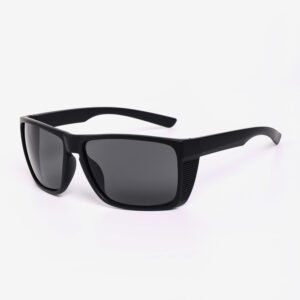
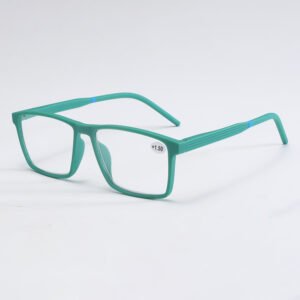
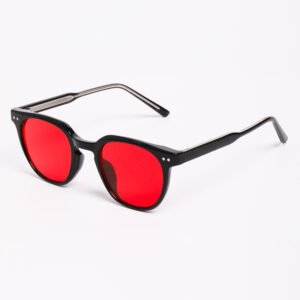
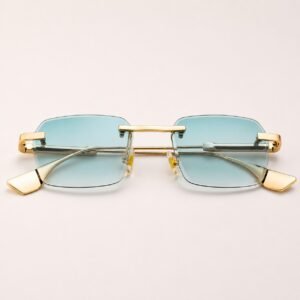
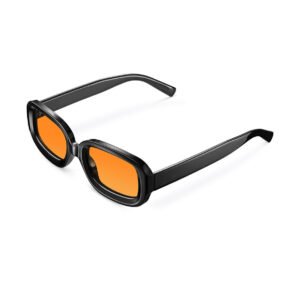
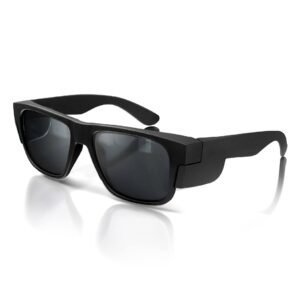
Picture this: You just launched a new summer eyewear collection. Sales are brisk. But within a month, your customer service inbox is flooded. Buyers are complaining about hinges snapping, frame colors peeling off after exposure to sunscreen, and cheap plastic irritating their skin. Your brand reputation takes a hit, and your return rate eats up your profit margin.
If you are a B2B eyewear brand owner, retailer, or distributor, you cannot afford to build your business on disposable materials.
This is exactly why the world’s top luxury eyewear brands refuse to use standard injection-molded plastics, opting entirely for acetate sunglasses. But what exactly makes cellulose acetate the undisputed king of premium eyewear frames?
In this guide, we strip away the marketing fluff and dive into the manufacturing realities. You will learn the technical differences between acetate and regular plastic, why premium acetate justifies a 300% retail markup, and how to leverage this material to scale your eyewear business.
The Core Concept: What is Cellulose Acetate?
Before understanding its commercial value, we need to look at the chemistry. Regular plastic frames (like Polycarbonate or standard acrylic) are petroleum-based. They are produced by melting plastic pellets and injecting them into a mold. It is fast and cheap, but the end result feels mass-produced.
Acetate—specifically cellulose acetate—is a semi-synthetic polymer derived from natural renewable resources, primarily wood pulp and cotton linters. Instead of being injected into a mold, acetate is manufactured in large, solid blocks or sheets. The frames are then carved out of these sheets using precision CNC machinery.
The Mazzucchelli Standard
When we talk about high-end acetate, we must mention Italian powerhouse Mazzucchelli 1849. As the gold standard in the industry, authentic Mazzucchelli acetate offers a depth of color, rich transparency, and a structural stability that cannot be replicated by cheaper alternatives. Using premium materials like this is not just an aesthetic choice; it is a definitive statement of your brand’s positioning.
Acetate Sunglasses vs. Regular Plastic Frames: The Technical Breakdown
Why do buyers instantly recognize a $200 acetate frame over a $20 plastic one the moment they pick it up? It comes down to manufacturing constraints and physical properties.
1. Depth of Pattern vs. Surface Painting
The Plastic Reality: Ordinary plastic frames rely on surface-level painting or water transfer printing to achieve patterns like tortoiseshell. Over time, UV rays, sweat, and facial oils cause this top layer to peel or fade, exposing a dull plastic base.
The Acetate Advantage: Acetate’s color is embedded throughout the material. To create a Havana or tortoiseshell pattern, distinct sheets of colored acetate are layered, heated, and fused together. The pattern runs all the way through the frame. Even after years of wear, an acetate frame retains its rich, dimensional color.
2. The 7-Day Tumble Polishing Process
The Plastic Reality: Injection-molded frames come out of the mold nearly finished, requiring only a quick surface spray for gloss. The finish often feels “sticky” or overly slick, lacking a premium tactile feel.
The Acetate Advantage: High-end acetate frames undergo rigorous tumbling. After CNC milling, the rough frames are placed inside large wooden barrels filled with bamboo pegs, pumice, and specialized polishing oils. They tumble for days—sometimes up to two weeks—smoothing out every hard edge. This is followed by meticulous hand-polishing. The result is a glass-like, warm, and luxurious finish that injection molding simply cannot achieve.
3. Adjustability and The Optician’s Preference
Here is a major pain point for optical shops and independent retailers: fit.
The Plastic Reality: PC or cheap TR90 frames have “memory.” If an optician tries to heat and bend them to fit a customer’s unique facial structure, the material will either snap under pressure or slowly revert to its original shape over a few hours.
The Acetate Advantage: Acetate is a true thermoplastic. When gently heated, it becomes pliable. Opticians can easily adjust the temple tips and bridge width to ensure a bespoke fit for the end-user. Once cooled, the frame holds its new shape permanently. Furthermore, acetate frames allow for the insertion of a metal wire core inside the temples, adding weight, balance, and structural integrity.
4. Hypoallergenic Properties
Petroleum-based plastics can trigger contact dermatitis in sensitive wearers, especially when combined with sweat on the bridge of the nose. Because cellulose acetate is derived from natural plant fibers, it is inherently hypoallergenic. This dramatically reduces customer complaints regarding skin irritation, allowing your brand to market a safer, more comfortable product.
What Premium Acetate Frames Mean for Your Bottom Line
Understanding the technical specs is one thing; understanding how they make you money is another. Shifting your inventory from basic plastics to high-end acetate transforms your business model from a volume-based grind to a high-margin brand.
1. Commanding Premium Pricing
B2B buyers often worry that higher unit costs will hurt their margins. The opposite is true. While a standard plastic frame might cost you $2 and retail for $20 (a $18 gross profit), a meticulously crafted acetate frame might cost you $12 but easily retails for $120 to $180. Your absolute profit per unit skyrockets. Consumers are heavily conditioned to associate the weight, rich color, and metal hardware of acetate with luxury, making the price objection disappear.
2. Drastically Reducing RMA
Every returned item is lost revenue and wasted operational time. Because acetate frames utilize robust wire cores and typically employ heavy-duty OBE hinges, the structural failure rate drops to near zero. You stop losing money on warranty claims and start building a base of loyal customers who trust your brand’s durability.
3. Unrestricted Private Label Customization
With injection molding, you are bound by the molds available. Opening a new steel mold for a custom design can cost thousands of dollars, making small-batch custom designs financially impossible. With acetate, frames are cut via CNC machinery. This means your brand can experiment with unique geometric shapes, thick retro silhouettes, or avant-garde designs without the prohibitive cost of steel tooling. It allows independent brands to stay agile and react to fashion trends months faster than mass-market competitors.
Sourcing Premium Acetate: Why Partner with Yiwu Luba Eyewear Co., Ltd.
Finding a factory that claims to sell acetate is easy. Finding a manufacturing partner that understands the nuances of shrinkage rates, wire core insertion, and hand-polishing is rare.
At Yiwu Luba Eyewear Co., Ltd., we operate specifically to elevate your eyewear brand. We do not dilute our expertise; we focus exclusively on the engineering and manufacturing of high-end spectacle frames.
Here is how our OEM/ODM capabilities directly benefit your procurement cycle:
Verified Premium Materials: We source genuine Mazzucchelli acetate and top-tier domestic acetate to match your target price point without sacrificing the E-E-A-T (Expertise, Experience, Authoritativeness, Trustworthiness) of your final product.
Rapid Prototyping: Do not wait months to test a new market trend. Our dedicated sample room can turn your 2D design into a physical, hand-polished acetate prototype rapidly, allowing your brand to beat competitors to market.
Zero After-Sales Headaches: We utilize reinforced 3-barrel to 7-barrel hinges, deep wire core shooting, and precise CNC cutting. Your customers get frames that survive daily abuse, and you get glowing five-star reviews.
Scalable Production: Whether you are a boutique designer testing the waters or a large distributor needing consistent volume, our robust supply chain in Yiwu guarantees strict quality control and on-time delivery.
Ready to see the difference firsthand?
Stop losing sales to brands with better materials. Explore our Acetate Frame Catalog or reach out to our team today.
Contact us now via WhatsApp or send an inquiry to receive our latest B2B pricing tiers and MOQ options for custom OEM acetate frames. Let’s build a profitable, premium eyewear line together.